Growing up, as the months of each year rolled by, I began to take stock and pay attention to each month in particular. I actually learned to focus on each month of the year and prepare for the following month from the years that I spent in sports. Especially my time in organized sports in high school, each month held its own importance for the sport that I participated in.
The spring months held their own sporting events that were particular to that time of year; particularly baseball, softball, lacrosse, tennis, and track and field. I played lacrosse for a few years during the spring months in my early high school years, but not as a junior or a senior student. The summer months were extensions of the previously mentioned sports, but I knew for me that as the autumn grew ever closer it was time to prepare for the upcoming football season. And autumn’s arrival found me playing football each year in high school, but I was also aware of the approaching winter season, which for me meant getting into wrestling shape. When the wrestling season was over it was the start of spring, and the cycle would start all over again for me and my high school organized sports life.
When high school was over, I began to look at the months of the year in a different light while I was in the service. But at that time, I began to travel to places and countries that I had never visited before. Traveling to these different countries and nations began to show me how the people of those nations moved with the turning seasons of each year, and I began to see how people in different nations receive the changing seasons, month by month. It was fascinating to learn how the people of different nations reacted to each month of the year in their own style, and also at the pace of their own nation.
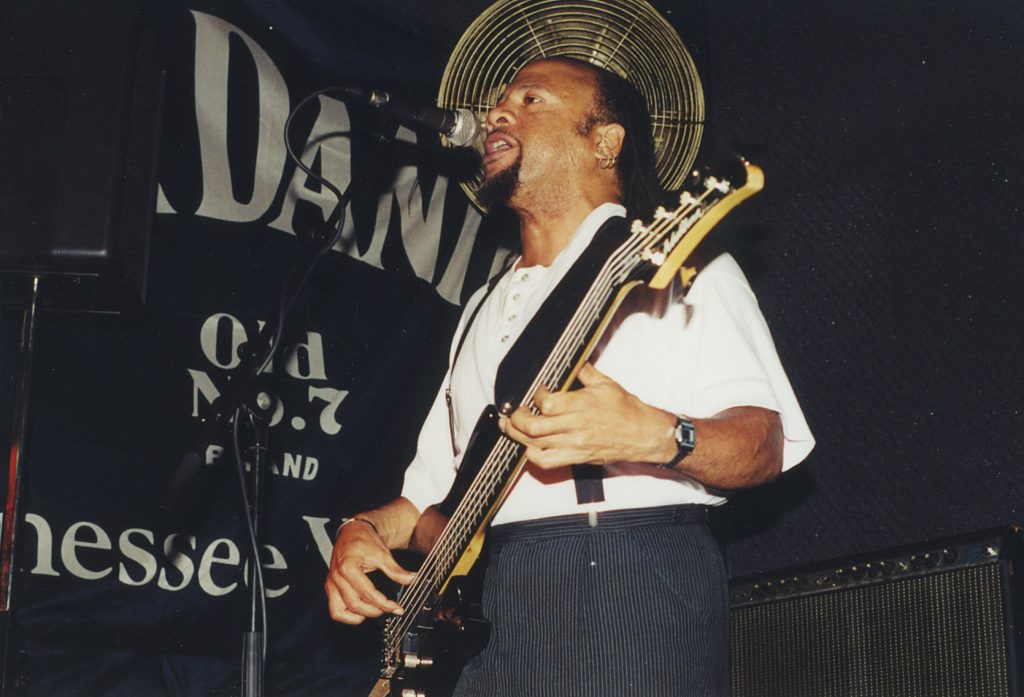
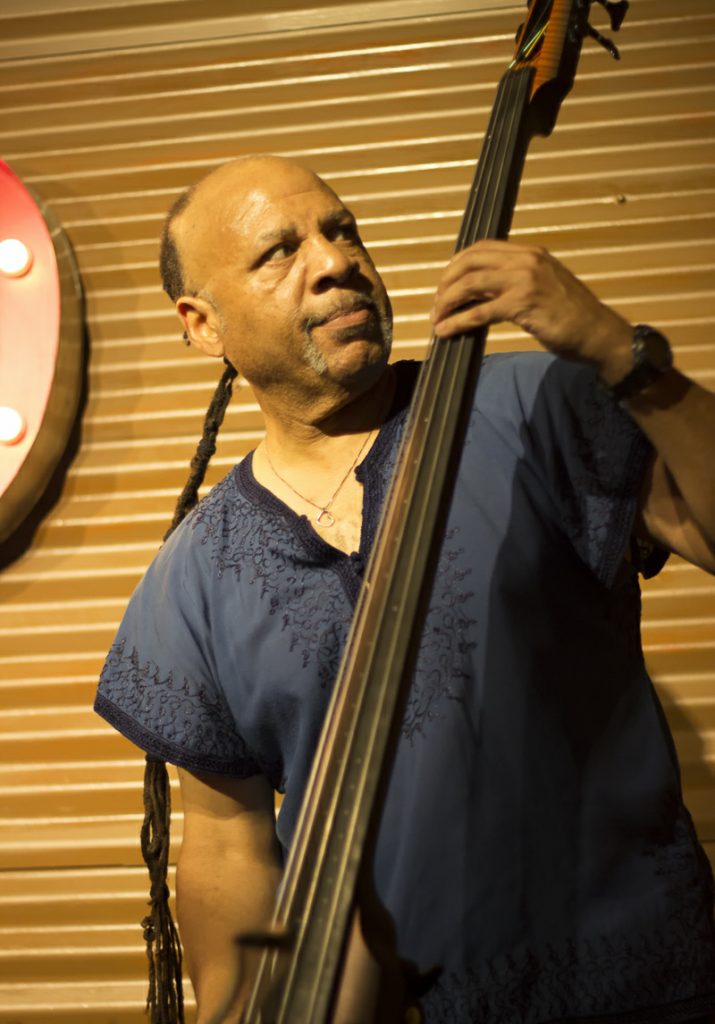
After my time in service, my life in music took hold of me and the months of each year took on a new significance as a musician. As a musician, I would play events and festivals in several different nations during all of the seasons over the course of a year. I played bass at events and festivals that marked each yearly equinox, and events and festivals that celebrated milestones particular to a given nation. To do this as a musician showed me that the months of the year have their own certain rhythm, or pulse, with the people of the world. Winter months appear to have a slower pace to them than some the other months of the year, but they have their own pace, nonetheless. The other seasons of the year, spring, summer, and autumn appear to have a more upbeat pace to them, and I saw this apparent upbeat pace reflected in the events and festivals that I would perform at as a musician over the years.
When I talk to people about the months of the year, they have their own favorite month; usually it is the month of their birth, but not always. For me that month is the month of October. While the other months of the year have their own pace and tempo, October has a pace and tempo all its own. Over the years that I have traveled the world as a musician, some of the most memorable events and festivals that I have performed in have been during the month of October. For many people and for many nations it is a time for harvest, and a gentle promise from the earth that the summer heat is behind them. It has been, and is, a time of joy and celebrations around the world for millions of people.
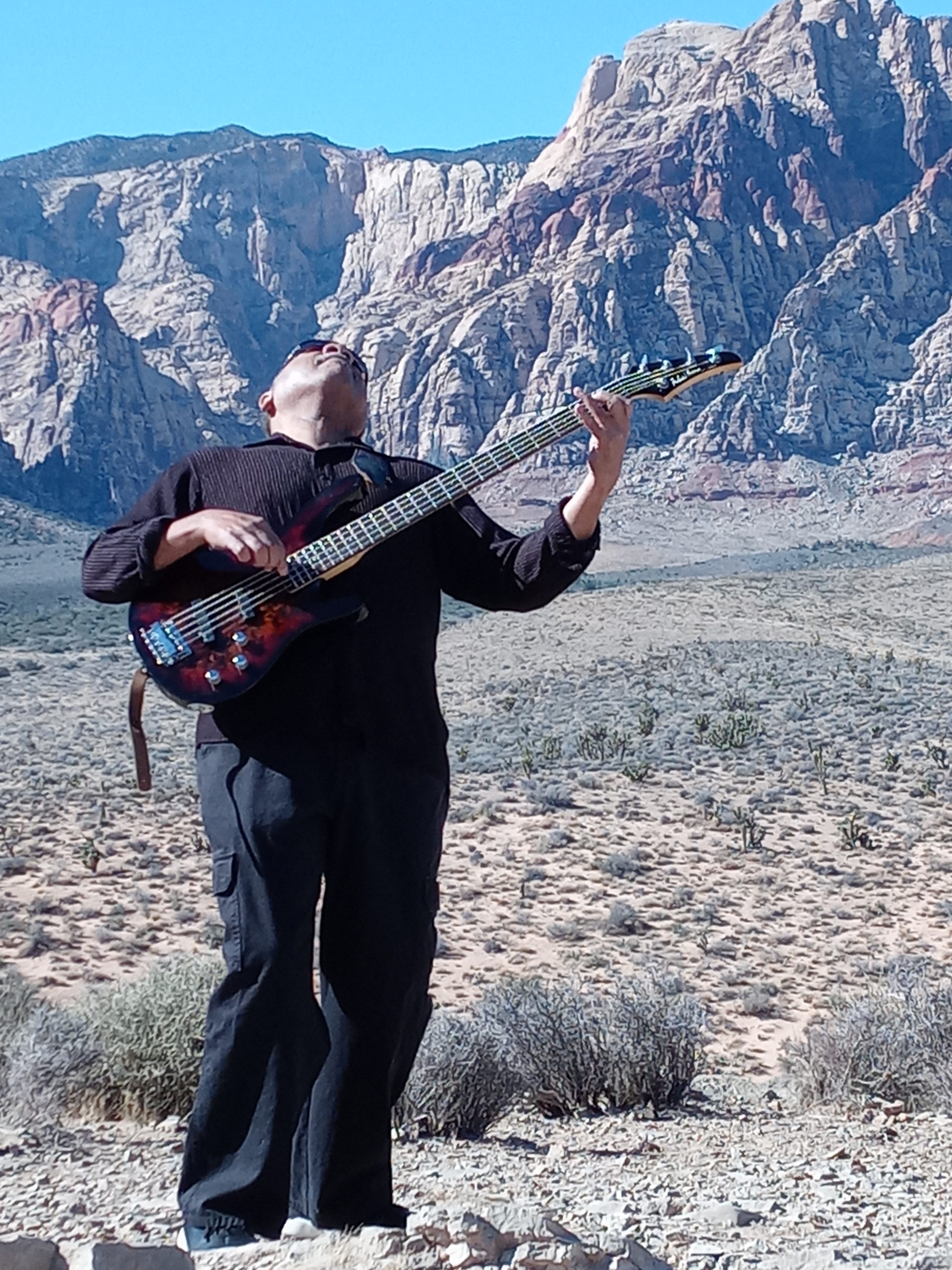
Which brings me to the title of my latest single song release titled “October’s Groove”. This song is an up-tempo instrumental that is inspired by this special transitory month. After playing many autumn festivals and celebrations around the world as a musician, I wanted to pay tribute to this singular month.
“October’s Groove” was a couple of years in the making. It began with the bass line that I had to teach to myself and learn from scratch. I have been working out some new fingering techniques on the bass, and learning to play them led to me finding the basic chord structure of the song. I had never played the bass like this before on a recording, this bass line that I came up with is new even to me. And that’s part of what makes music so exciting in my life, the opportunity to try something new and challenging on a new recording. This lower bass line part that I came up with makes this new song sound fresh and filled with the joy that I feel for the month of October.
Solo wise, I decided to open up a bit during the solo section of the song and let the joy of the song give me a nice foundation to share my solo ideas. I left it open and free, with the joy intact, and I am very happy with the results.
Percussion-wise on the song, I did the drums and some small, programmed percussion parts. But there is some sweet cowbell and hand splash cymbal work performed by my late friend Thomas “Block” Atkinson that compliment this song beautifully. Thank you for your music, Thomas, I miss you very much, Rest in Peace.
It is my wish that you listen the new single of mine titled “October’s Groove” at your leisure and know that it was a joy for me to create for you. I believe that it is a song that will lift people’s spirits any time of the year. And the spirit of the magical month of October shall remain with this new groove for you! Enjoy…
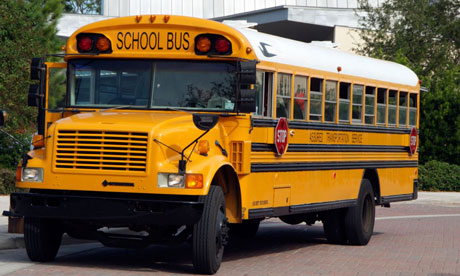
When I look back at having done so many shows and gigs over the course of nearly five decades as a bass player, I am taken aback at the modes of transportation that I and various fellow band members have taken to arrive at the event. I remember early on for me it was buses, big, yellow, and lots of them, to get me to and from the many concerts that I played with my school district’s orchestras.
Traveling within my school district was rather easy; the distances to travel to the district schools were not too far apart from each other. While there was not much travel for the elementary school orchestra that I attended, the amount of travel picked up considerably once I began to attend junior high school. During my seventh-grade year was the first time I heard the term “exchange orchestras” spoken by my elders. They told us orchestra students that we would join together with the other junior high orchestra in the school district to create one large orchestra. We were told that both junior high schools have been rehearsing a few of the same pieces during the school year. I was anxious to hear what two orchestras combined together would sound like.
When the two school district junior high schools got together for the first time during my seventh-grade year, it was my first exchange orchestra experience. We traveled as an orchestra from our school to the other junior high school in our district; it was very different than traveling to another school as a sports team. But we still had our own school spirit, and all of the players in our orchestra wanted to play their best in the presence of another school orchestra. The big yellow school bus was the way to get there, with their firm to hard dark green seats, no seat belts, and so long and cavernous inside.
As I moved on from eighth grade and became a high school freshman ninth grader, the travels that the school orchestra took were numerous when I look back on those days. Those big yellow school bus rides to events and concerts were not without the occasional mishap before traveling. Somehow, the emergency back door on one bus came open and an acoustic bass tumbled right out of it. The bus was parked at the time, and nobody got hurt, but I can tell you that the sound of an acoustic bass hitting and crashing onto the hard pavement in that parking lot was a sound that I will never forget. A sound that is hard to describe indeed!
When I was playing with the high school orchestra, the travel became more extensive, and we did exchange concerts with high schools that were outside our school district with high schools on Long Island. And more of those big yellow school buses to ride around in. They were always an experience to be in. And for special event use, I had the privilege to ride in a station wagon car that was painted school bus yellow and adorned with the requisite lights to identify it as an official school bus. When I was a high school sophomore, a group of five orchestra players, including me, had been granted permission to travel to the elementary schools and demonstrate playing our chosen instruments for the young students. I remember how cool it was to get out of class and go play at the elementary schools that year. Hey, these are some of the perks for playing music well I realized.
Travel by car became the main mode of transport after high school for a while. But soon came the vans, and the trucks that were often rented to get to shows with the band I joined right out of high school. I remember that most of the guys in that band would take turns riding along with the band’s equipment technician in either a van or a truck to the band’s shows. I took my turn in the van mostly and got to see Long Island and New York City from the view of an equipment van. Unique to be sure. But all of us wanted to ride with the band’s manager to the gigs; she had a small two-seater British sports car that we all loved. I got to ride to a couple of the band’s shows with her, she could really drive that car and that car could really fly when you stepped on in. That was fun for me.
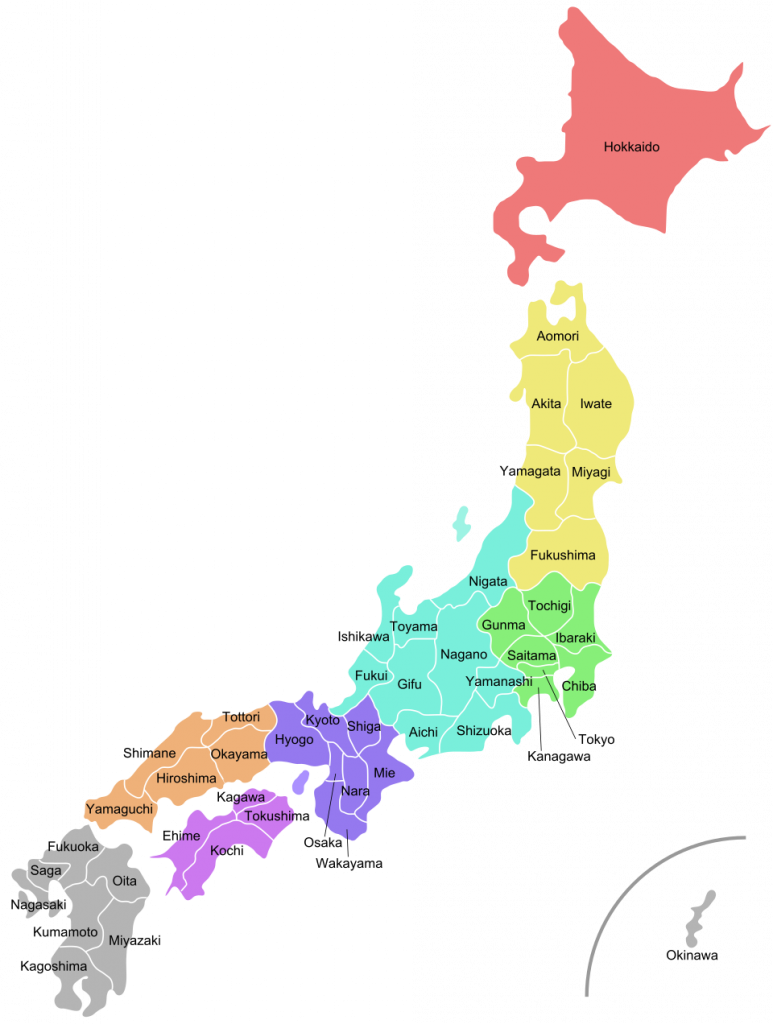
When I spent time in Japan in my early twenties, we got to band gigs mostly by cars and vans. The occasional gig there would be an equipment truck or two for the band’s backline and P.A. system. And just when I thought that I would not ride in one again, the band reserved a big school bus that was dark blue in color this time, to travel a long distance to some shows on the north part of Honshu Island. It was winter and cold, but that big bus had a heater that worked and that saved the day for us. And it was nice to travel at the height that a bus seats you. The view was very nice, and the landscape of Japan was beautiful to look at. I never said never again about riding in a big school bus, because, well, it could happen at any time!
Most of the shows that I traveled to in the U.S. as a bass player have been by cars, but vans and rental trucks are included here as well. I would rent a truck sometimes for one band that I was leading in the high desert of southern California; we would make the 200-mile round trip to Los Angeles and do our shows there. The band would try to ride together to save on fuel, and so I would always try to rent a travel truck that had a compartment door leading to the cargo area in the back of the truck. The guys would bring something soft to sit on and ride on top of the backline and P.A. gear. We were all young and having fun in a good band, I enjoyed driving the truck and having a laugh with the band members.
But as I moved on to Los Angeles as a bass player, the modes of travel began to include airline travel to and from shows. Traveling with the band on an airline is one of the fun experiences to have as a musician, I think. There is nothing like knowing that reason that you are riding on this aircraft is because you practiced at home as a musician, and you rehearsed very well as a band. I thought about the major label artists that I saw early on in my musical career and how they often traveled by air to their shows. I thought that it was a real privilege to travel by air to shows, and I felt that I would do so for as long as the opportunities presented themselves.
Once I made the move to Europe and to the Netherlands, it became surprising at all of the modes of transportation that I took to get to shows. I traveled to shows in cars and vans when they were long distance from where I was living in Amsterdam, which was normal. And the travel by air to get to the concerts in Italy and elsewhere were special indeed. To travel by tram or bus in the city was easy once I learned the city routes. But what set apart my mode of travel once again was my use of a bicycle while I was living in Amsterdam. I walked around Amsterdam and used its public transport system during my first year living there. But once I got a good touring bicycle, that was how I got around for most of all of the remaining years that I spent there. You see, there is a very real bicycle culture in the Netherlands, and people there take their bicycle system and infrastructure quite seriously. It is possible to ride your bicycle safely from one end of the country to the other there, clearly marked bicycle paths that include traffic signals are everywhere, in every small village or town to every big city there is a place to ride your bicycle.
And people who decide to drive cars there know that the person on a bicycle has the right of way, but things do happen. I did get hit by a taxi one day while I was riding my bicycle, I was not hurt too badly, and I was much angrier than hurt. I shouted at the driver, he knew what he had done, but he and his passenger stayed behind locked doors and rolled up windows as I shouted at them. When I was done, we went our separate ways.
I thought to travel to as many shows as possible on my bicycle in the city of Amsterdam would be my way of getting around. I had purchased a touring bicycle that had a rack on the back wheel and a slightly smaller rack in the front wheel. These came in handy as I could wear my bass travel bag with my bass inside of it gently on the back wheel rack of my bicycle. On the front wheel would be my backpack that had cables and spare parts and sometimes gig clothes for the stage. Keep in mind that when on a bicycle, you’re out in the elements. The winters are very cold in Amsterdam, so I would dress very warmly to make sure that I would not get too cold on the way to my shows. And dressing properly afterward to make sure that I would be warm on the way home after a very late night/early morning gig when it was really cold outside.
I also keep in mind how many people got around by boat in Amsterdam; there are more than we think. I always loved a boat ride on the canals in Amsterdam; each one was very special to me. It is the most different way that I have seen a city anywhere I have lived. So, I think that the shows that I played on the canal touring boats were just great. I met a guitarist and his sister who were doing a duo show on the touring boats and they asked me to join them. I did, and I must say that to ride my bicycle down to the dock with my bass and get on board the touring boat and play music for the entire 90-minute tour were some of the most memorable experiences that I had while living in Amsterdam. I really liked doing that and I am so thankful to that guitarist for inviting me to join him and his sister.
I enjoyed my mode of transport by bicycle during my years of living in Amsterdam. I finally wore out the first bicycle that I bought, and I went back to the same bicycle repair shop that I bought it from and got another one. I rode that second bicycle until I left Amsterdam, and funnily enough I went back to the same bicycle repair shop and sold it back to the shop owner. We both laughed about this, and he was happy that I had taken good care of that bicycle so someone else could use it.
Returning to the States, it has been back to cars and vans to travel to shows with along with the occasional airline mode of travel. It was strange when I sold my bicycle in Amsterdam; I went back to walking and using public transport to get around. But when I see the new driverless cars beginning to populate the roads here in the U.S., perhaps it is just a matter of time that I will get the privilege to travel to a show in one. And that will be a story in itself indeed. Happy trails to your next show and stay safe out there!
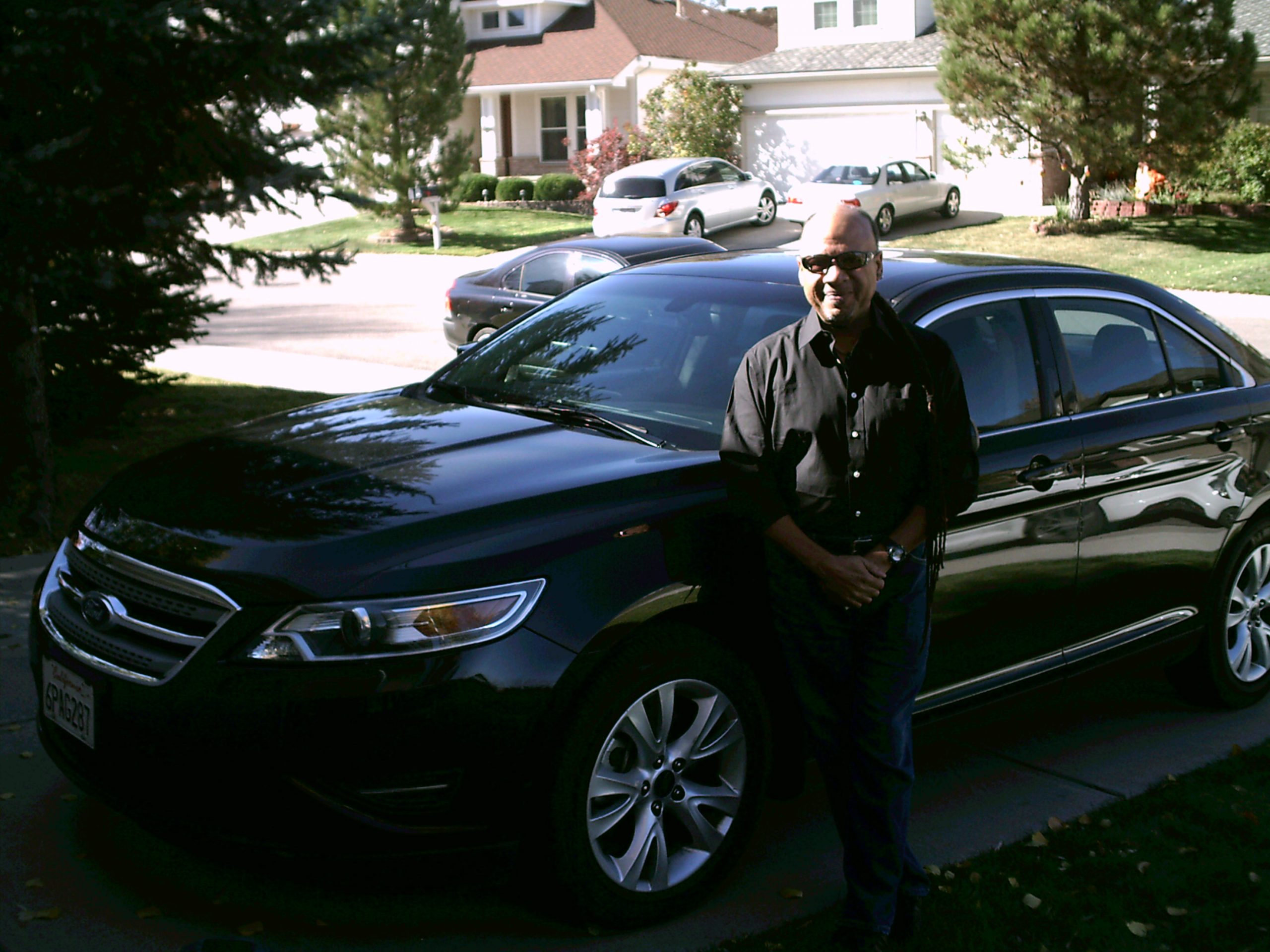
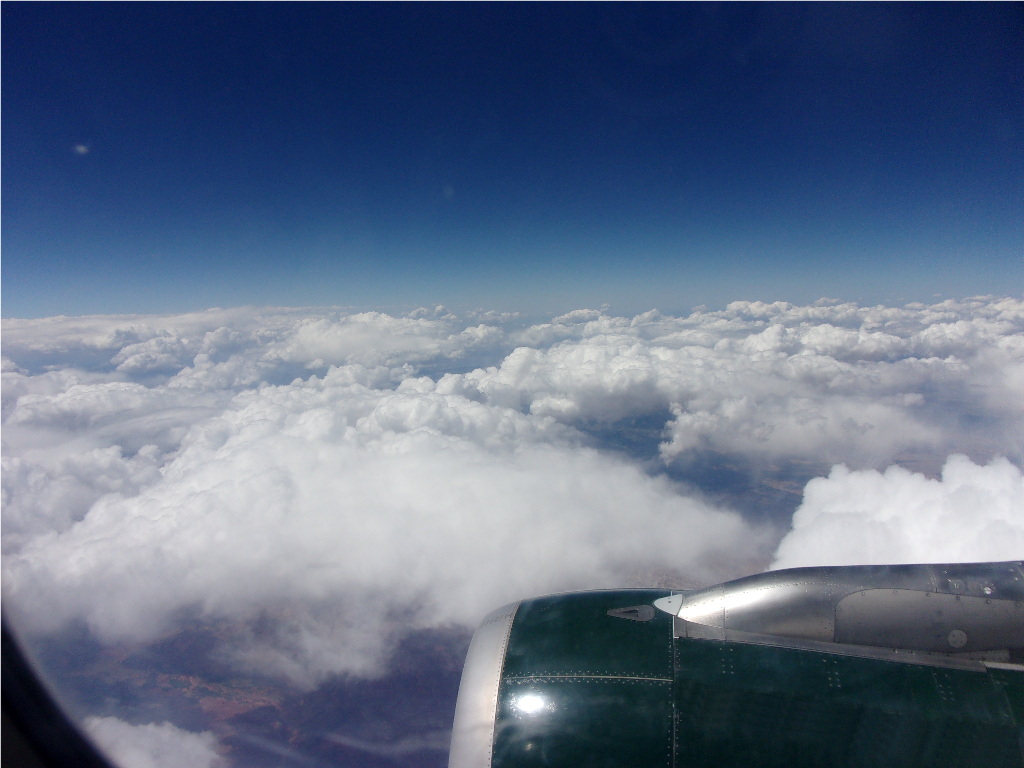
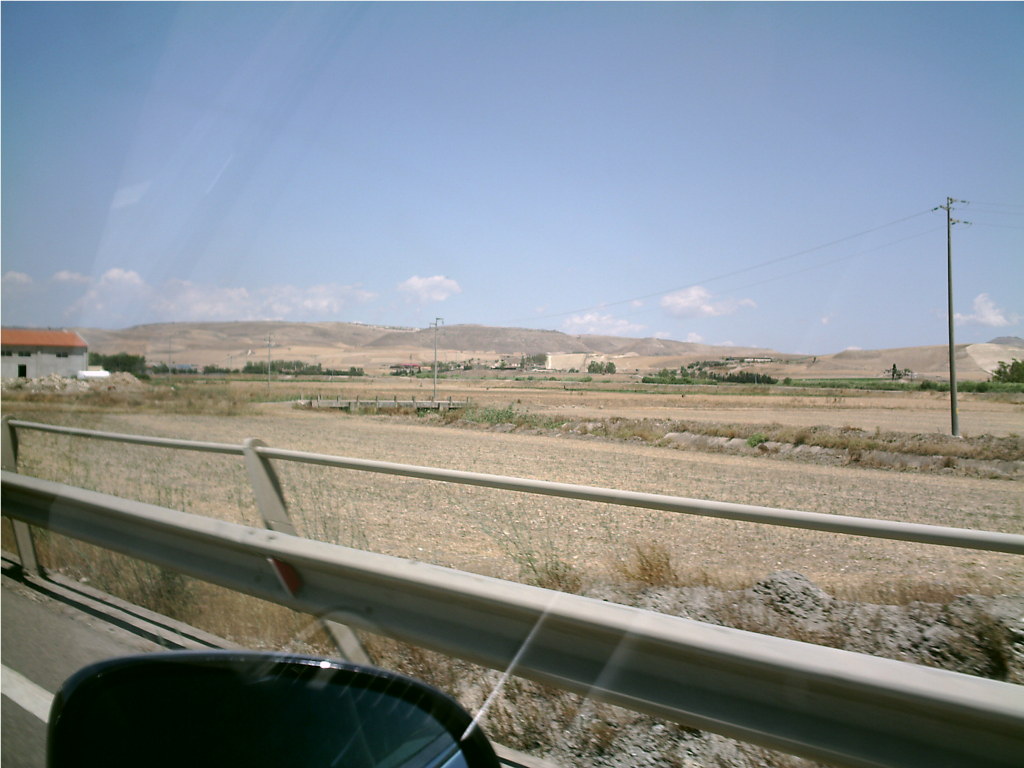
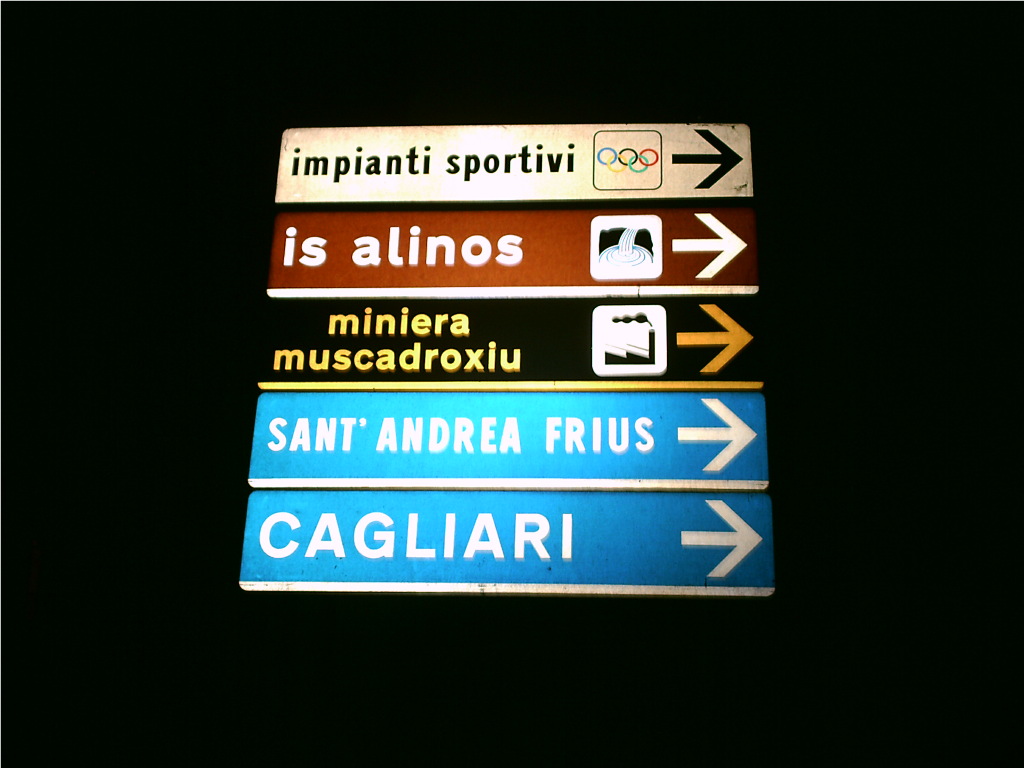
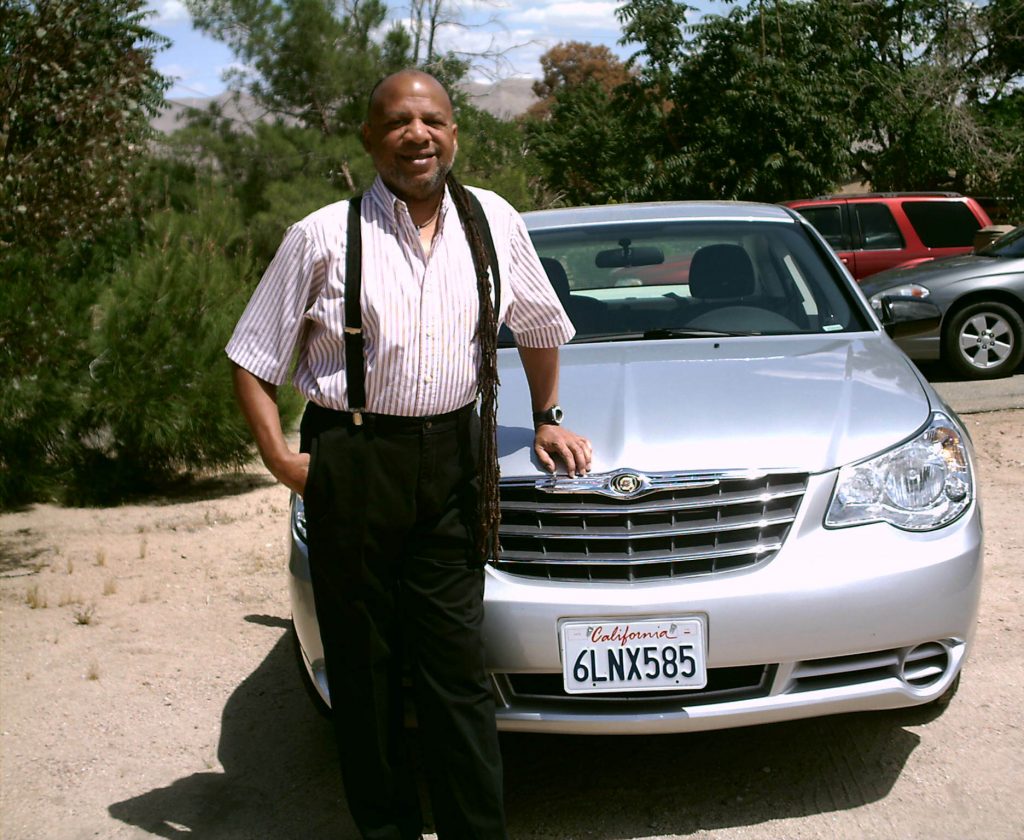
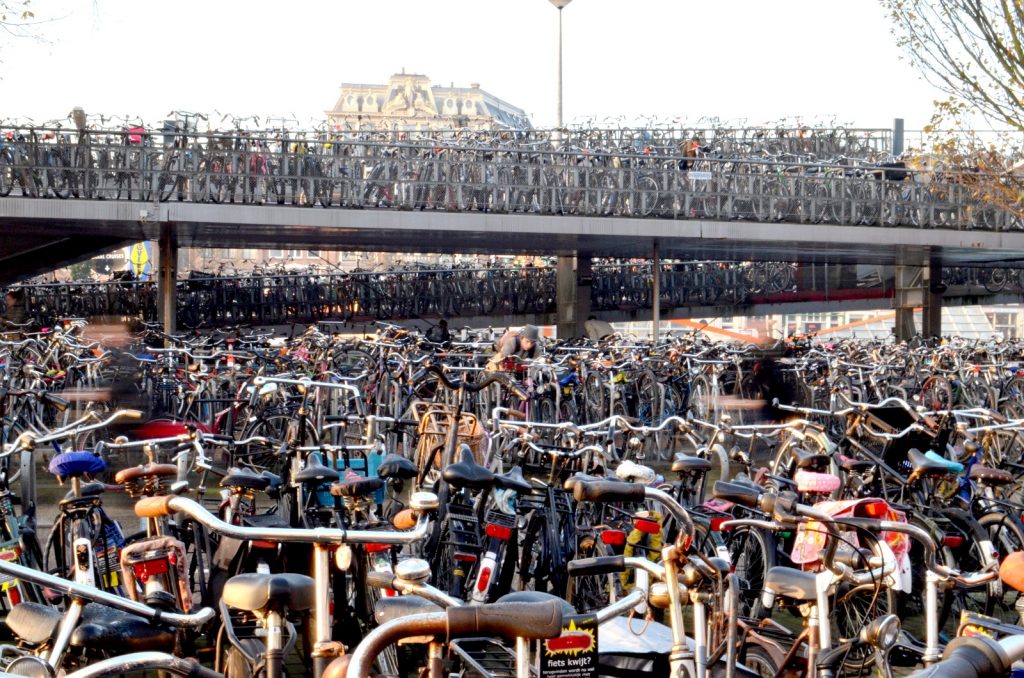
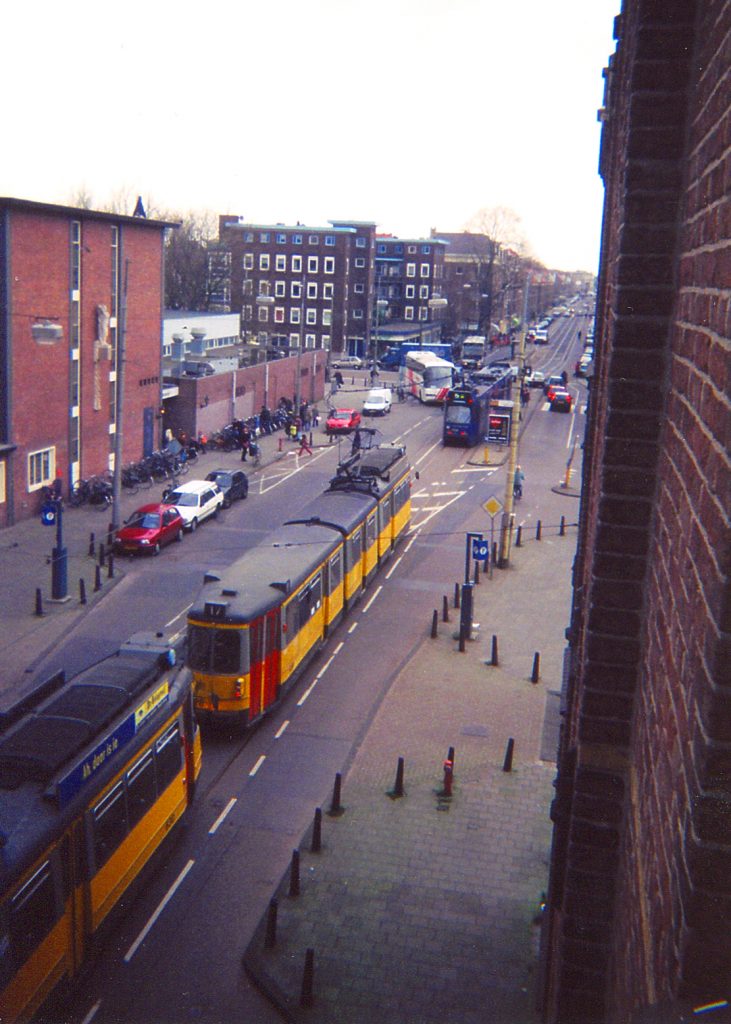
Jerome in flight to a studio recording date in Parker, Colorado, 2014Jerome traveling to a show date on Sardinia Island, Italy 2008A sign showing the way back from a show by Jerome Lee City on Sardinia Island, Italy 2008Jerome Lee in Hesperia, California visiting an old friend for a reunion gig in Apple Valley, California, 2010Jerome would park his bicycle among the thousands of bicycles at Central Station, Amsterdam, the Netherlands during the late 1990’sJerome Lee would very often travel by tram or by bus in order to get to shows, rehearsals, and giving music lessons in Amsterdam, the Netherlands. Photo taken of Marnixstraat, Amsterdam, NL in 2000Sometimes a school bus gets the job done to get to and from the show!
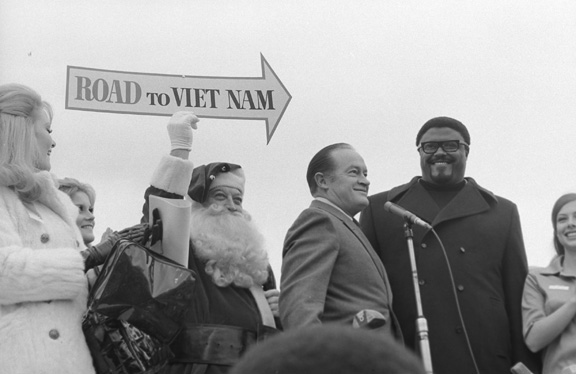
As a child growing up in the late 1950’s and into the 1960’s I became interested in what we call “modern entertainment”, this is often referred to as “show business” or “show biz”. Watching the early evening variety shows on television exposed me to a number of celebrities who had made a name for themselves. While there were variety shows led by celebrities with big names, there were a small number of them who seemed to stand out from the rest. Among these standout celebrities was a man named Bob Hope. He stood out among the most popular of celebrities during that time period and for a lot of good reasons.
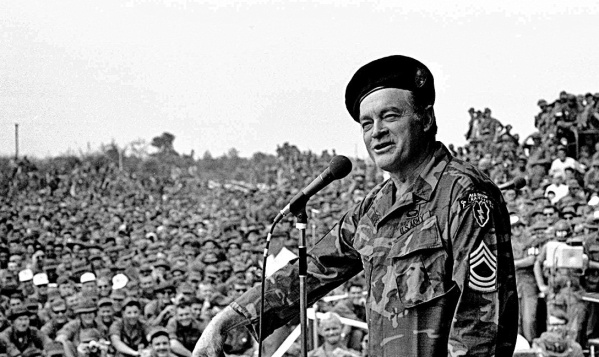
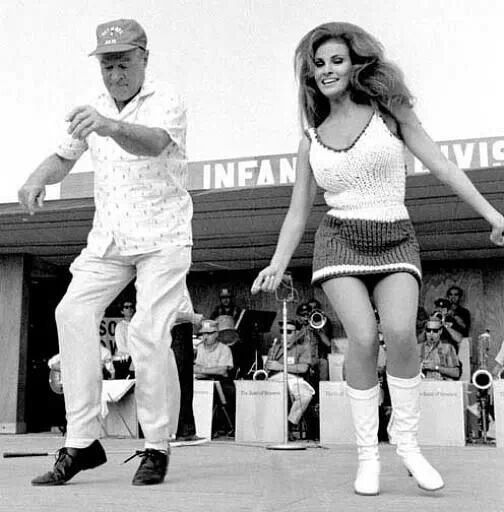
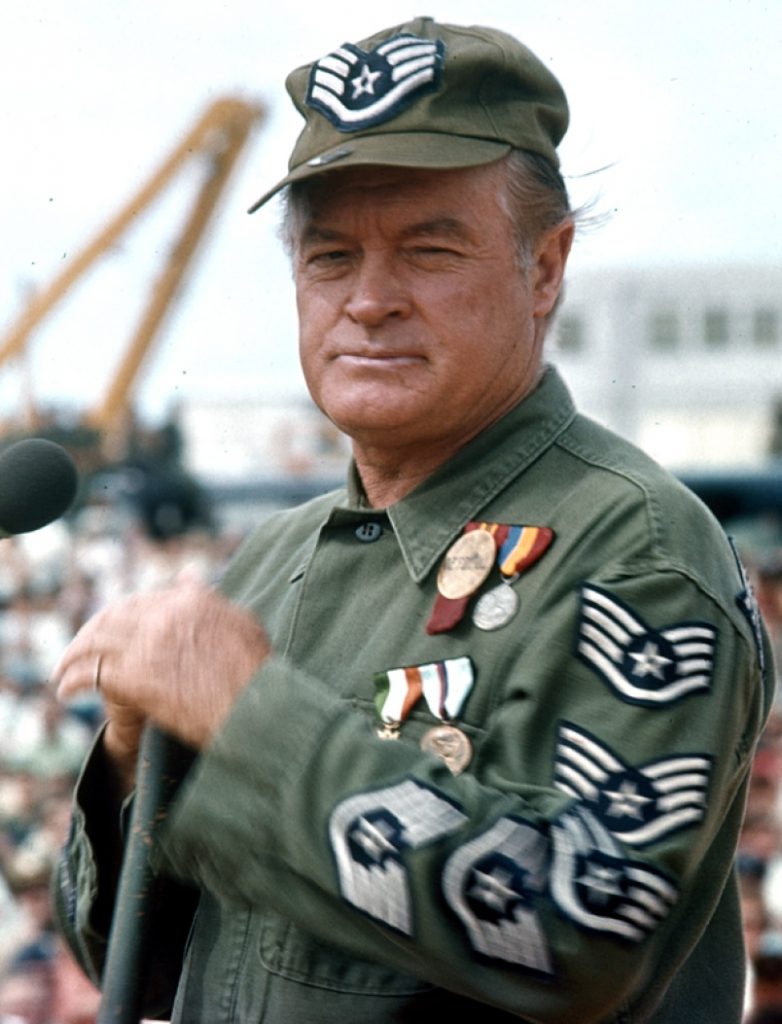
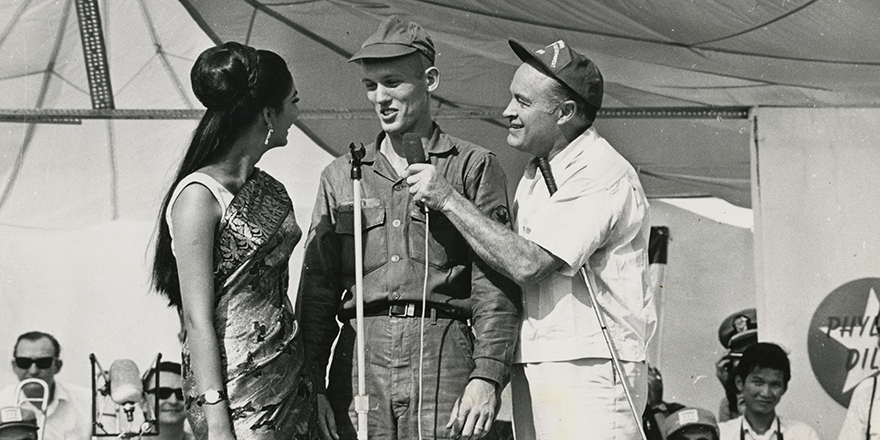
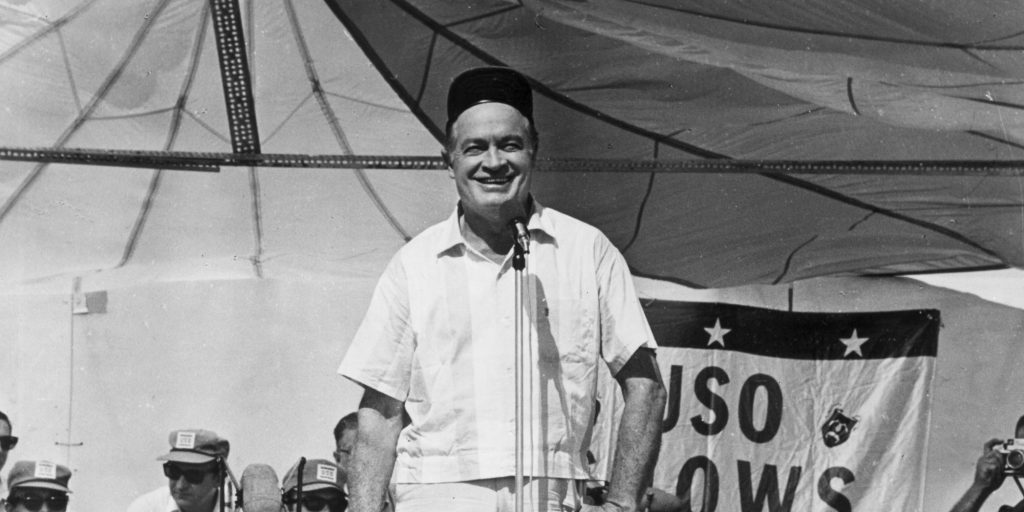
As I grew old enough to understand what was going on with the war in Vietnam, I was watching on television as Bob Hope took an entourage of celebrity actors, musicians, dancers, and artists on several tours into the land where war was taking place. I was fascinated by this; I mean that there was a real war going on not too far from where he would stage his performances. The older folks around me would praise Mr. Hope for his efforts to entertain the troops in such environments. It was not the first time that celebrities would entertain the troops during wartime; I was reminded that during World War II many kinds of entertainment from celebrities took place. But somehow, watching what Bob Hope did during the Vietnam War to help the morale of thousands of troops had an impact on me. And I would unknowingly follow through with my own experiences of entertaining the troops later on in my own music life.
While I was in the service, I began to truly entertain the troops once I had been stationed overseas in the Far East, in Japan during the late 1970’s. I had been teaching some other guys in the barracks there who wanted to learn to play the bass guitar. They were fun times to be sure. But one day a man I had not met before peeked his head in my door and started asking some music related questions about who I was. I answered him, and then he asked me if I would like to be in his band. I said yes, and we kept that band together for over a year and a half as we entertained the troops weekly at the base NCO club, and at other bases around Honshu Island in Japan. The band played contemporary jazz music mainly, but we would throw in a couple of the hit soul songs of the day for fun. Playing in that band got me used to the idea of playing music for the troops; I really liked to play music for the men and women on active duty.
Once I had returned to the states in the early 1980’s, I finished my contractual duties with the service and was honorably discharged. At this point in my life, I was living in the high desert region of southern California. I had already put together a good band there, and we were entertaining the troops on the base there even while I was still in and on active duty. But once I was out, the shows for the troops did not end for my band. One night after a rehearsal, one of the parents of the band members suggested that I give the U.S.O. a call and inquire about playing music for their functions. A flood of memories came rushing back into my mind as I thought of those shows that I saw Bob Hope perform in Vietnam many years earlier. I was inspired by the thought, I wanted to walk down some of the path that Bob Hope did, even though the nation was not officially at war. I wanted to feel some of what he felt, and I wanted to do some good for the troops.
After getting the phone number for the U.S.O. in Hollywood, I called them up and spoke to the director of that division. His name was Jim Balla, and he was a most gracious, kind and intelligent man to meet and to work with. My band was ready to go for the most part, but Jim let me know that it would be better for me to have a female lead singer fronting the band. He said that this would be better for the troops, and I understood why. After a short search and some auditions of female singers, the band began to work with a beautiful model/singer/artist from Los Angeles who wanted to be part of the experience.
During the 1984 Summer Olympics held in Los Angeles, the U.S.O. notified me that they wanted to hold an Olympic Games closing party at their Hollywood facility. I accepted a contract for the show with them and later drove the band about 100 miles to Los Angeles to perform the event. It was great fun for the band, and our beautiful female lead singer kept the many troops there nicely entertained. There were many other young women there as well, and they all had a name tag with their names clearly printed on them. I asked Jim Balla who they were, and he told me that they were chaperones for the troops. They were there to dance and socialize with the troops, and to help keep their spirits up. After the event was over that night, I watched for a moment as all of the female chaperones got back on some big tour busses to be whisked away into the night. I told Jim that I thought working with the USO was a great experience for me, and that night I told him about my thoughts on Bob Hope.
Having told director Jim Balla of the Hollywood U.S.O. about my admiration for Bob Hope and what he had done for the troops during wartime did not go unnoticed. Jim then later booked my band for a show out at a really large Army base in southern California. He said that we would be playing for several thousand troops at this show. I said OK, it will be good for my band to do this.
When my band arrived at the Army base, we had traveled there in a few separate vehicles. I got out and spoke to one of the Army officers, he was thrilled that we were coming and told me that he had studied acoustical engineering while he was in college. He told me that he had found an area on the base that would serve as a natural amphitheater. The Army had already set up a pair of flatbed trailers for a stage and a diesel generator for power for the band gear at the show site. “Where is this place?” I asked. The Army officer let me know that we would have to drive out over six to seven miles of tank trails to get to the location. Wow. What an experience that was for the band. We were in passenger cars loaded down with backline gear, and one of the band members came in a pickup truck. It was a very slow and tough ride navigating the tremendous potholes left from the tanks on that trail to the concert site. What a journey that was.
Once we had arrived at the flatbed trailers and diesel generator at the show site, we got all of our band gear out of the cars and set up on the two opposing flatbed trailers the Army had set up for a stage. There was a heavy piece of rubber mat material that covered the place where the two flatbed trailers came together; to keep a good safe place to step for us, and to keep things from falling through the gap between them. Setting up, it was amazing to see a huge, long line of personnel trucks bringing the troops out to the show site. And the Army officer that I had spoken with was right; the large rocky hillside that he had chosen for the event had the proper slope to it, just like you would see in a man-made amphitheater. It was perfect it seemed. As the troops arrived, the number went above 5,000 in number. Closer to show time, one of the officers informed me that there were over 6,000 troops that had come to see the show, all of them in their combat uniforms.
My band played an amazing show, and funnily enough, we were using a male lead singer for this show. But the U.S.O. told me that this was ok for this event. The stage lighting was austere as it was six 100-watt floodlight bulbs each inside a large portable light fixture. But this somehow worked out to light the band up for all the troops in attendance. The roar from the crowd of troops was deafening after each song. They were really appreciative of our being there. It was an amazing experience, and I thought of Bob Hope for a moment while the troops were cheering. And then I understood why he did his shows, and why he chose to go out into harm’s way to make things better for the troops.
The U.S.O. in Hollywood did call me shortly afterward and asked me to return to that same Army base in southern California to play another concert. They laughed and reassured me that I would be on pavement the entire time for this show; they had heard about our adventures of driving miles across tank trails. They gave me their sincere thanks and a positive nod for doing that show with my band. And they kept their word on our return to that Army base, we set up the band on a nice stage in a good outdoor location on the base, it was easy to get to. The crowd was smaller this time too; around 2,000 troops showed up and had a great time with the band. Again, it was a good experience for me and my band; we played well and had fun.
The U.S.O. shows and bookings lasted for more than a year with my band; we played for the different branches of the services and did our best to entertain them all. We did this and we wanted to be there, to bring our best to the troops. To this day, I still ask young bands if they had ever considered playing for the U.S.O. Because playing music for the U.S.O. it is a unique experience to have as a musician, to be a part of those kinds of experiences is very special to all who are involved. And I did this because I was inspired by a man named Bob Hope, a man of talent, wisdom, courage and conviction who did the shows that other top celebrities probably would not have done. Rest in Peace Bob Hope.
And my eternal thanks to the U.S.O. for the great music event experiences for the troops that I was honored to participate in during my lifetime.
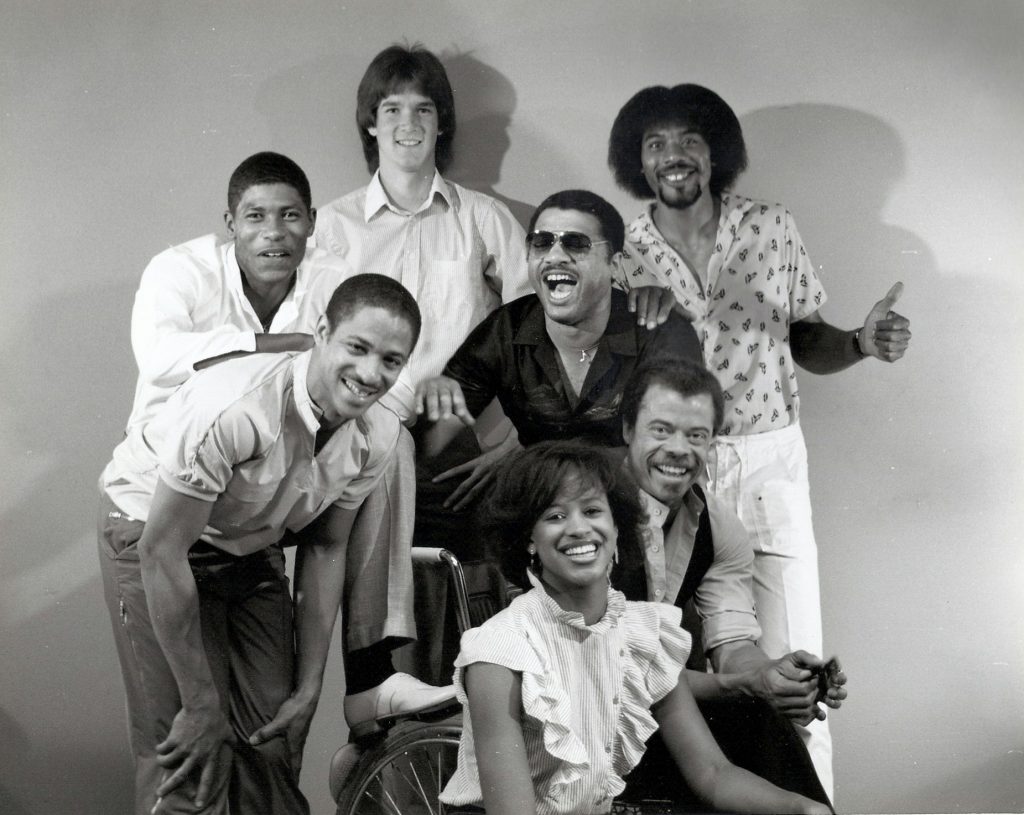
Bob Hope and Raquel Welch at a U.S.O. show in Vietnam 1966Bob Hope in stripes at a U.S.O. show in Vietnam during the 1960’sBob Hope and Rosey Greer at a U.S.O. show in Vietnam during the 1960’sBob Hope entertains troops at a U.S.O. show in Vietnam, 1967Bob Hope stands on stage and smiles with Les Brown’s band, during a 1967 USO show to entertain American troops overseas during the conflict in Vietnam.My band Fat Sound Incorporated (FSI) in 1984 played many U.S.O. shows in Southern California 1984-1985
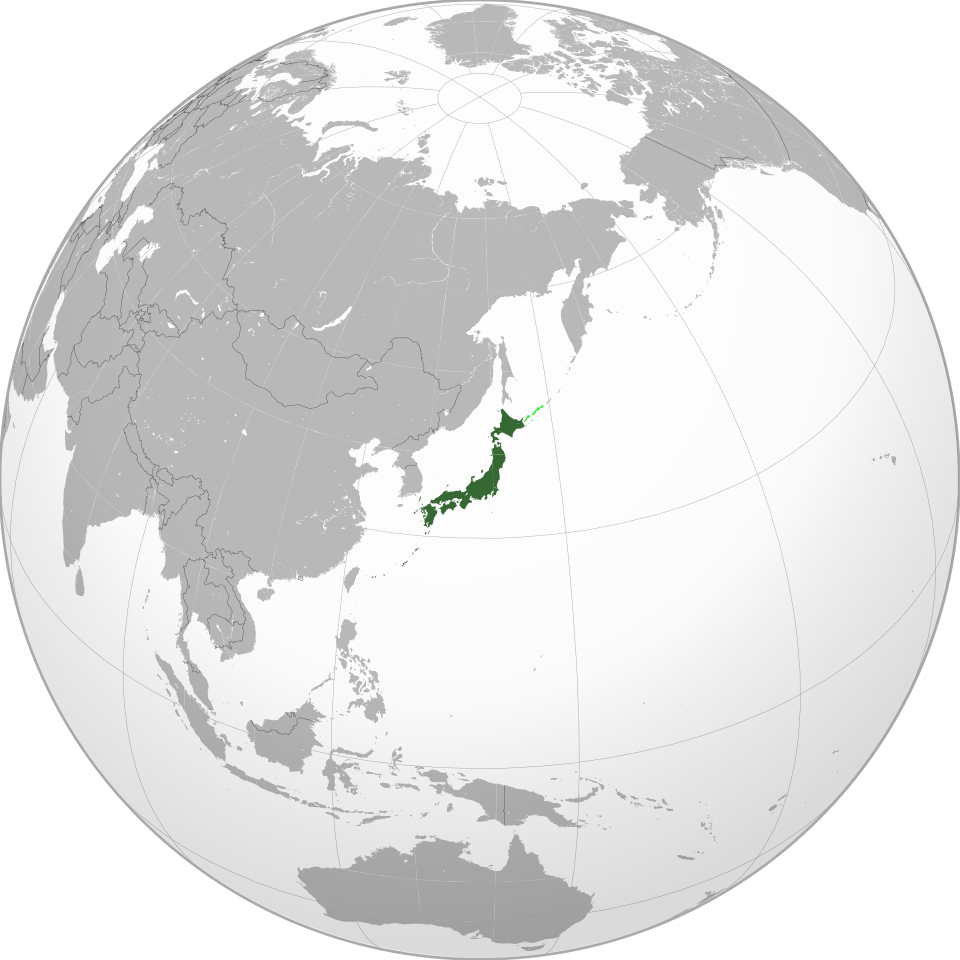
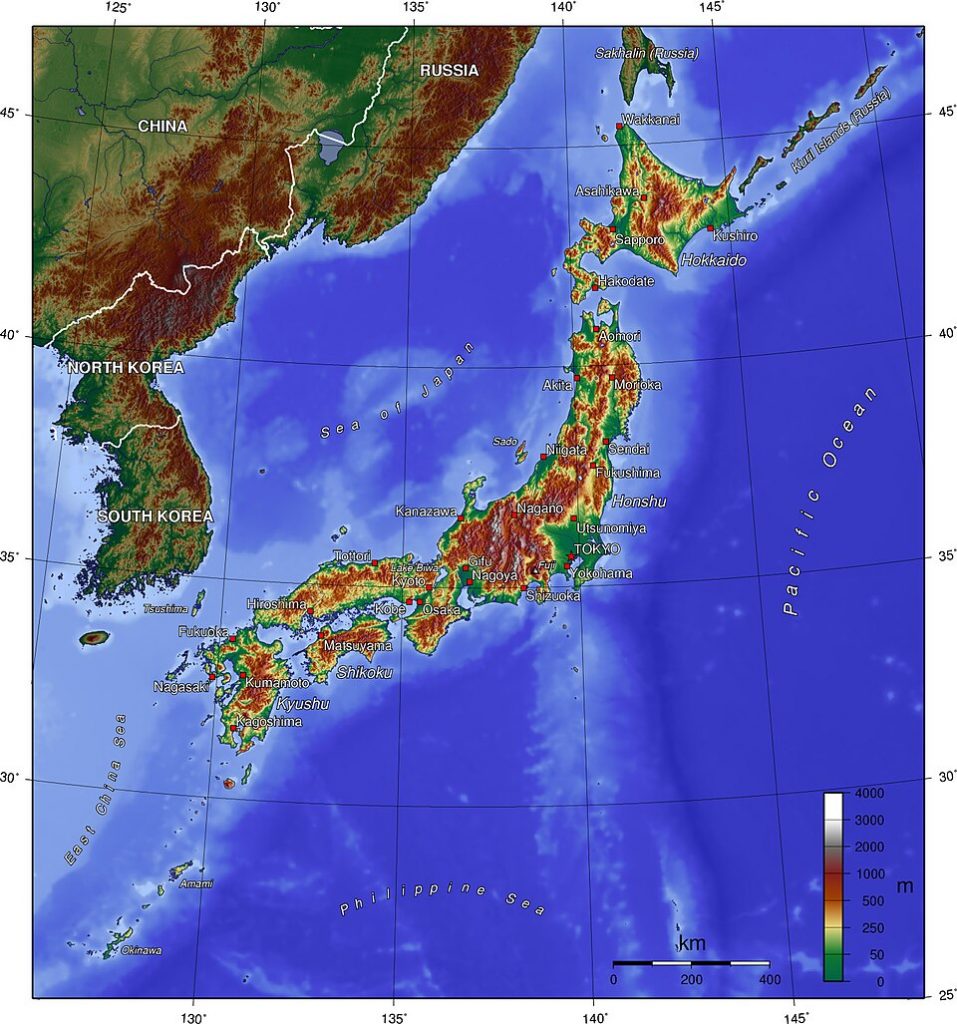
I never thought that I would ever visit the Far East in my lifetime, let alone live there. But it did happen to me. My life in the service offered me a chance to be stationed in the Far East, and I accepted my service branch’s offer. My assignment placed me on Honshu Island in Japan, and for me it was quite a culture shock at first. The time was late 1977, and my assignment was to run up to near the beginning of 1980. I had never lived outside of the US before at that point in my life, and here I was as a 20 year old taking it all in. It was fascinating, this island of Japan, and I wondered about what the culture there could exchange with someone like me. Well, I was about to find out in a good way.
My fellow servicemen advised me to stay close to the installation at first, don’t wander off too far some of them said. But it turned out that I was much more excited and curious about my new surroundings than I had anticipated. There were a couple of guys there that I met who knew the island and had a car to drive. That was one way to get the lay of the land. Then there were some other guys that I met who knew the mass transit system in Japan rather deeply, it was with them that I got to understand the routes, times and locations of the mass transit there. And the mass transit introduced a new set of social rules for me to follow. It was the first time that I encountered the transit workers known as “Packers”; these uniformed workers actually push and pack people onto the train cars stopped at their stations during the transit travel rush hours in the mornings and the evenings. That to me was amazing to see, and to be a part of sometimes as I too was squished onto a couple of cars packed with transit riders during the rush hours.
Driving a car is different in Japan too, they drive on the left side of the road, and so the vehicle’s steering wheel is mounted on the opposite side of what I was used to. One service member I met who was close to his assignment in Japan ending offered to sell me his mini van. It seemed in okay shape and the price was right, so I bought it. I drove it around the installation for a couple of weeks to get used to driving on the left side of the road. Then, I took it off of the installation on a regular basis and drove out in traffic with the rest of the native Japanese drivers. One driving habit that I did pick up from Japanese drivers was the habit of dousing my headlights when pulling up to a traffic signal at night. Almost all of the Japanese drivers did this; it was their way of showing each other a courtesy by bringing down their car’s headlights; this helped also to cut down the glare from the headlight’s reflections onto each driver’s rear-view mirror while stopped at a traffic signal at night. I carried this habit with me for a short time upon my return to the US, but I didn’t keep it for very long.
I did bring over my first bass guitar to Japan with me. But I knew that it was time for a new bass soon, and in my travels, I found a nice little music store just outside of the installation where I was stationed. The store was called Three Sisters Music, and the store owners were very kind Japanese people and spoke just enough English to carry on a small conversation with me. Inside of that music store there were brands of guitars and basses that I had not heard of, Ibanez, Greco, and Yamaha instruments were on offer for musicians to try out. I liked the promotional posters on the wall inside the music store too; they were of acts named Pink Lady, Kasumi Watanabe, and even a nice poster of bassist Suzi Quatro. It turns out that Suzi Quatro was very popular in Japan during my time there.
I continued to visit Three Sisters Music in the small town of Fussa in Japan as often as I could find the time to do so. It was a great store, and one of the owners there took a liking to me. She offered me some choices in bass guitars as I was definitely looking for a new one. After trying out a few bass guitars, I settled on one that she chose for me, it was a Greco bass guitar that was modeled after the popular Fender Precision bass guitar. I liked it right away, and came back to the store shortly thereafter and bought it from her. It was a nice bass to have for sure. After meeting a drummer in the barracks one day, I found myself playing in a contemporary jazz band that also played some r&b and soul music as well. The drummer was doing all of the band’s bookings as well as finding musicians to play in his band.
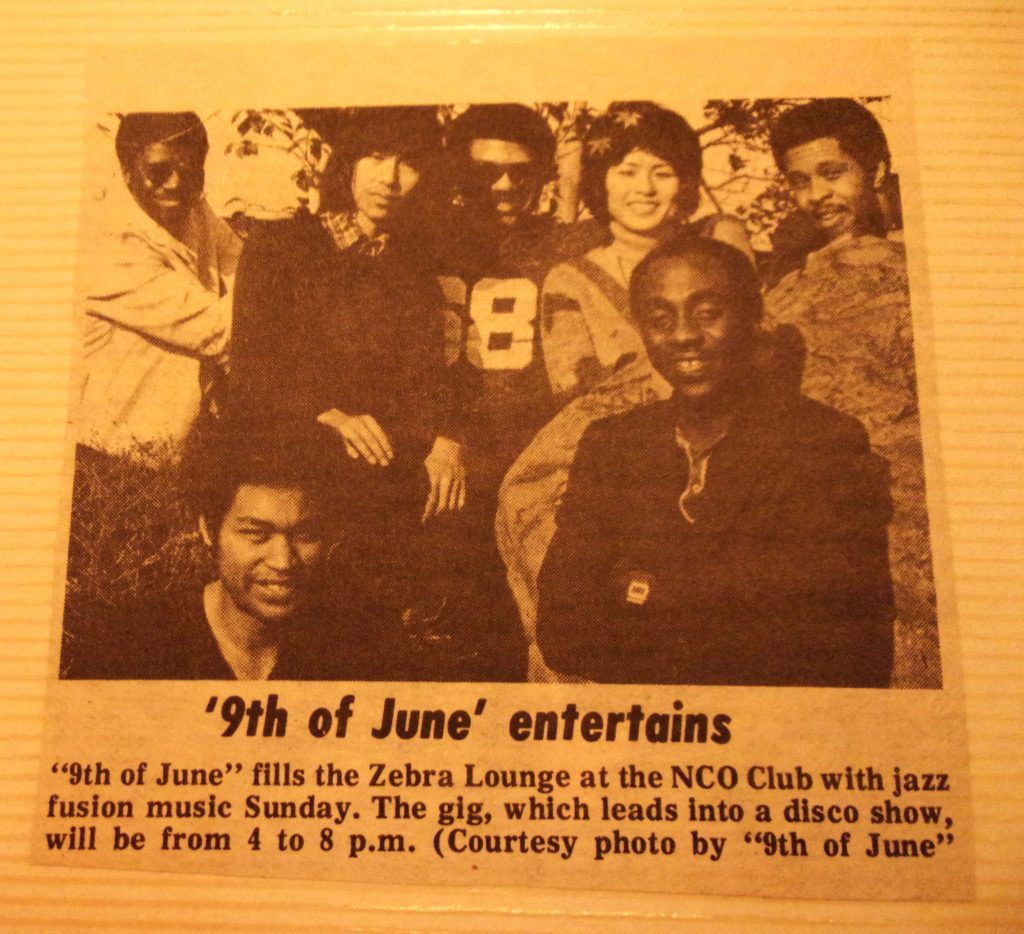
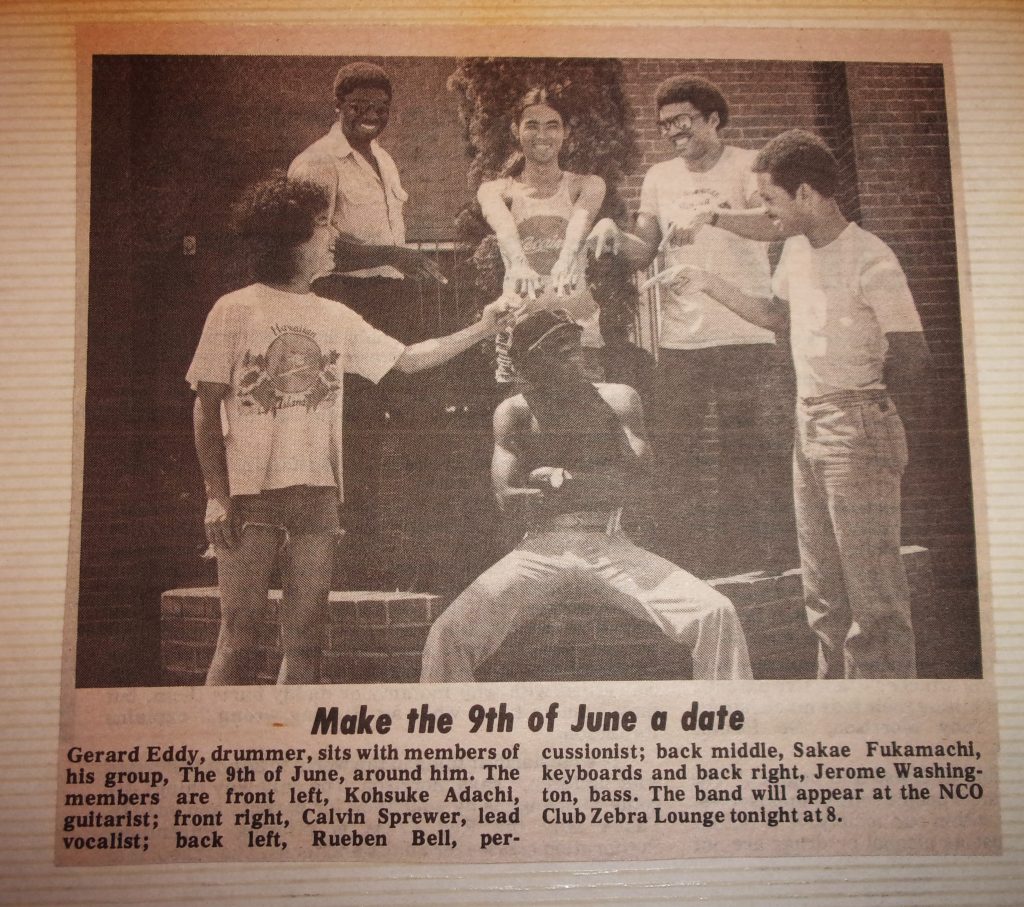
That band, named the Ninth Of June, was the first true international band that I played in. The band’s makeup was a blend of African-American servicemen and Japanese Nationals; and we played together very well. The guitarist in the early band, named Kenny Moore, was an American and was very good, but his assignment came to an end and he returned to the US. The drummer then found a great Japanese guitarist named Keiji Yoshida, and Keiji stayed with the band until my assignment was over. We got to play together in that band for over a year and a half, and we did some of the best shows around the island of Honshu. I remember the first major concert that the band did, it was held in a nice concert hall in Fuchū. I wrote a new song for the band to play; we had rehearsed it before the concert. We took a little time together as a band at a little pub across the street from the concert hall, I remember being a bit nervous before our show. But one of the other Japanese guitar players that I knew there offered to share a shot of whiskey with me. It was my first shot of the famous Suntory whiskey, only one, and I was able to settle down a little bit before we had to play.
The concert was really good, and when it came time to play my original song I was ready to do it. It was the first time that a band was playing a piece of music that I had composed before an audience, and I thought it was such a great experience and a blessing to have done so on Honshu Island, Japan. I took my bass solo space that I had written into the song with some real gusto. The band’s lead singer gave me the nickname of “Ironhand” after the song was over. By the way, I never did decide a title for my song, so I named it “Indecision”. We actually played it for the rest of the time that I was with the band, and I was always honored to play it.
Keiji Yoshida was such a wonderful guitarist in that band. He taught at a music school in Tokyo where he had some 30 guitar students. We eventually played at Keiji’s school as a band; it was a real treat to play music for his students. He was a big fan of the band The Crusaders, he really loved their music. He liked the guitar styles of the Crusaders’ guitarists of that era, namely Larry Carlton and later, the late Billy Rodgers. Keiji also loved the way that the late saxophone player Wilton Felder played, Wilton’s melody ideas and solo ideas were something that Keiji was always interested in and admired. After playing together for about a year, Keiji came to a band practice one day with a new chart with a new song titled “Like Felder” that I just loved. The melody and that song’s sensibilities touched beautifully upon the spirit of The Crusaders music. And in the classic Crusaders style he wrote the main melody of that song to be played in unison with a tenor saxophone, it was just brilliant.
As the time went by during my stay in Japan, I found myself returning to Three Sisters Music to look for yet another new bass guitar. The same lovely lady at the store showed me another Greco model that was a beautiful custom neck through body design that I really liked. I traded in my first Greco bass that she had sold me for the new one. I just loved this new bass. This lady from Three Sisters Music actually brought her husband along and came on to the installation one Sunday night to hear me play my new bass with the band, it was a fun and memorable night for us all. And it was also at a time when I knew that my bass playing was getting better, I was happy to know that I had progressed some more on my chosen instrument.
A fellow serviceman helped me find some rehearsal space for the band to practice in on the installation. It was a good spot where we could play at show volumes and not bother anyone. Since there were three male vocalists also in the band, a public address (P.A.) system was needed for these singers. I was given keys to a medium sized van and was shown where to go and get the P.A. system for the band to play through. The place where the P.A. belonged was around an hour’s drive from the installation, it belonged to an audio professional named Aoshi Someya. I liked Someya when I met him, he had a great sense of humor and he knew a lot about the music scene in Japan and in the US. The name of his studio was Alfalfa Studios, and yes, it was named after the popular character Alfalfa from the Hal Roach TV series called The Little Rascals (Our Gang). Someya had several black and white photos of the Alfalfa character all around his studio, it always made me laugh when I would visit him to take care of the band’s P.A. system.
Among the many gigs that the Ninth Of June played was a weekly night at a serviceman’s club on the installation. The gig was always on a Sunday night, and if the P.A. system was not already picked up by a certain time from Someya’s studio then folks would begin to worry a bit. So I made sure to make the long journey out to the studio a couple of days ahead of time. One afternoon, I had agreed to meet with Someya at his studio at a certain time. I drove the band’s van out to his studio in Musashi-Sakai to pick up the band’s P.A. system. But after ringing the bell to the studio, knocking on the door, and then trying to call Someya from a public phone and still not contacting him, I decided to wait in the van for a little while. But I didn’t stay in the van for very long; I saw a pub nearby that looked like it served food, so I went inside. The local Japanese folks inside welcomed me and I sat at the small bar and ordered a beer for myself. It was a lively pub, and lots of chatter came from the people as they met after their work day and talked about things.
I was okay with sitting alone in the pub and waiting for Someya to return home. But a couple of curious Japanese guys came over to where I was at the bar, and one of them began to speak with me in broken English. This guy was doing his best to speak to me, and I tried my best to speak with him too. He would translate back into Japanese to his friend what we were speaking about. It turns out that they worked as local newspaper editors and story writers. They liked me and bought more beers, and talked some more. I did eat a little something there at the pub that night, remembering that I still had a long drive home. But my new Japanese friends were happy to speak with me, an African-American foreigner, someone that they didn’t meet every day. The beer kept coming. The big jukebox in the pub was loaded with 45RPM records, and the more folks drank, the more they would replay Bing Crosby’s version of “White Christmas”. You see, it did not have to be the holidays for the locals to play that song over and over again. They just loved it. For me, it was a little out there, but okay.
A couple of hours later, Someya looked inside the pub and found me at the bar with my new friends. Our eyes met, and he could tell right away that I was feeling just fine, if you know what I mean. He came inside the pub and up to the bar where he immediately apologized to me for being so late. I told him that it was alright, and I introduced him to my new friends. They all spoke to each other in Japanese for a moment; Someya was telling them about my work as a musician, and my reason to visit him. My new newspaper friends were delighted to know this about me as we parted ways. The pub was fun, but Someya would not let me drive home that night. He put me up at his home to sleep overnight; it was such a kind thing for him to do for me. In the morning, he and his wife served me a traditional Japanese breakfast before I left, it was delicious. And the green tea that they offered me was excellent.
There are more stories about my working with this band during my years of living on Honshu Island, Japan that I hope to share in some later blogs. To have spent the time in Japan that I did was quite special to me. The people were kind, and the Japanese musicians that I met and played music with were stellar. I’m glad to have done that. Mata aim Asho.
The 9th of June band in 1979 (front row) Kenny, Jerry (back row) Reuben, Keiji, Jerome, Mikiko, CalvinThe 9th of June band, Japan 1978
It is fun to think about the styles of dress that I and other musicians have worn over the years. I know that I have worn a wide variety of clothing on stage during the past few decades.
There has been the do-it-yourself look, that’s where everyone shows up to the gig wearing most anything that they like. It would be appropriate clothing for the stage though, but it just didn’t say to the audience to look at the band as a unit. It said to the audience to listen to us first and then have a look. Then there are the gigs where there is a more uniform look to what is worn by the band, not matching shirts or jackets necessarily, but a like color scheme to show the audience. It says to the audience that you can look and listen at the same time; it is a different kind of what I call a “show confectionery” for the audience.
Then there are the gigs where the entire band wears the exact same shirt or jacket on stage. Jackets are one thing, but when it is matching shirts that are being worn by the band members then it is often (but not always) led by a front person who wears a shirt that is very close in color to the band member’s shirts. I have been in bands where the lead singer would wear the exact opposite colors of the band member’s shirts, and when the band plays well together and is very tight, then the “show confectionery” is presented in a different way that also has a positive impact on the audience. And when I say the band is tight, I mean a really good show style band that plays medleys and different readings of popular songs; for me those bands were a blast to play in.
Some bands that I was in had a theme that ran throughout the music they created, and they would dress for the stage using the theme of the music that was to be presented. If the theme of the band’s music was love, then that would be the flavor of how the band members would dress. And on the other hand, if the theme of a band’s music was based in calling out social issues and bringing social injustice to light through the band’s music then the band members would dress for that. They would often wear things that I had never seen them wear until the date of the show, and sometimes what was worn would be stunning to me. I liked that part as well because it would bring out a set of unexpected emotions in me on stage that would make for a unique performance each show.
The rock bands that I played in later on definitely had their own theme and their own style of delivering the music. I would listen first, but I would also watch very closely at what the band members wore. Especially the lead instrument player or the lead singer. They knew the true flavor of the music that they had composed, and they knew what kind of image and message they wanted to deliver to the audience. Paying attention to all of this found me in clothing stores of all kinds, looking for things to wear on stage. The effort was always worth it; I was able to find the type of stage clothing that spoke with the theme of the band’s music and message; as well as give a singular persona of myself to the audience while performing with the band. Back in the 1980’s when I was doing this, rock music was drastically changing, and the bands that I played in reflected this. The cross-genre styling of rock bands at that time allowed me to weave my stage clothing style into the ever-changing theme and styles of the music that was being played back then.
Going back to when I had finished high school, I found myself in a great soul and r&b band that played all over Long Island and sometimes in New York City. It was mainly a cover band that played the soul, funk, and r&b hits of the early to mid-1970’s. Halfway through the 1970’s I enjoyed an awesome summer of playing music in this band. Since it was a cover band, the theme and the message of the music came through a few of the songs that it played; it was a horn section-based band with a lot of power. For us, wearing really big Afro hair styles was part of the norm back then. The bigger, the better. I even did a couple of shows wearing a pair of those wild platform shoes that men and women wore back then. Those shoes were very popular. But I found that my feet would hurt some after playing a really long gig in platform shoes, so I chose another shoe style a bit closer to the ground, and that made my feet a little happier. But that band definitely did surprise me with what they would wear to some of the shows we did, the lead male and female singers could dazzle an audience with just their voices alone. But what they would wear would also help to raise the band’s appeal to another level for each audience that we played to. And I did like my big Afro hairstyle.
But when I started my first original jazz/rock style band at the start of the 1980’s, I wanted everyone in the band to dress well for each audience that we were to perform for. To me, it shows respect for the audience, and the one thing that I did frown upon in that band in its beginnings was the wearing of tennis shoes or “sneakers” on stage. A little later, I relaxed this view with this band as long as their shoes fit in with what we were trying to do. If someone did wear tennis shoes on stage, they needed to be clean and neat. Hey, it was my band, and it was all I could ask for. And the people in that band responded to the theme and style of the music that we composed and blended it with what we wore on stage quite nicely.
Since then, the jazz bands and the blues bands that I have played in over the years have also had their own theme, style, and message to their music. Finding stage clothing for one of the contemporary jazz groups that I was in during the early 1990’s included dressing rather snappily on stage, and for me to wear a sport coat on stage for many of the shows was fun. It was a jazz band that was playing some modern styled music, it was quite original and the music did well on the national charts. Without a singer in that band on any song ever, there was still a bit of fun and a thrill for the crowd when the band leader would take a moment to remove his coat; and others in the band would also find a moment in the show to remover their own coats as well. It was fun for the audience to share those moments. Most of the time, if I wore a coat or a sport jacket on stage, I would wear it for the entire performance. If I would take it off at some point during any performance, it was always because it was too hot on stage, whether the band played indoors or outdoors.
When I would play solo bass guitar shows, my own shows have a style and a bit of a theme as well. Playing solo, or even as a duo, you know that the audience is really going to scrutinize you from head to toe and really check out how you are dressed on stage. For those, I do pay attention to every aspect of what I wear, because I know that people are naturally going to look me up and down closely as I perform. Again, this is yet another type of “show confectionery” that can be bestowed upon the audience when giving a solo performance. I have seen solo performers dress in some really startling outfits on stage, but their music and their theme match up so well with what they wear.
While the clothing styles have changed and even morphed over the years to the ever new, the musicians in bands will continue to introduce new looks on stage that amaze people and more. I think that it is fun to take a close look at what is being worn on stage by musicians and artists over the years. And I was glad to take part in what people saw and heard from the stage as an artist. And your style of dress is?…
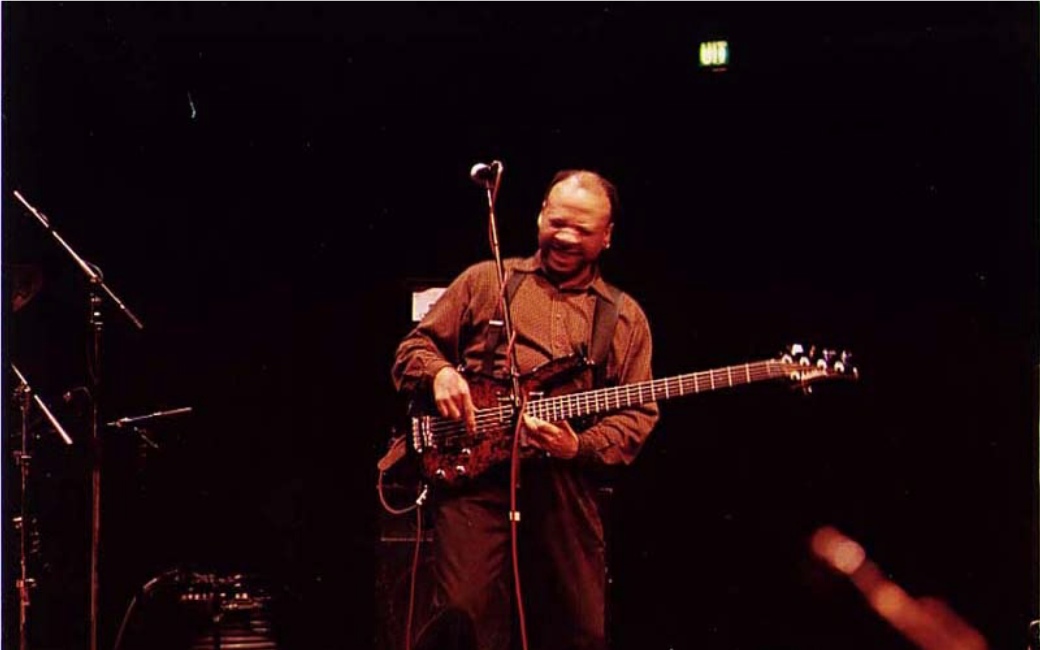
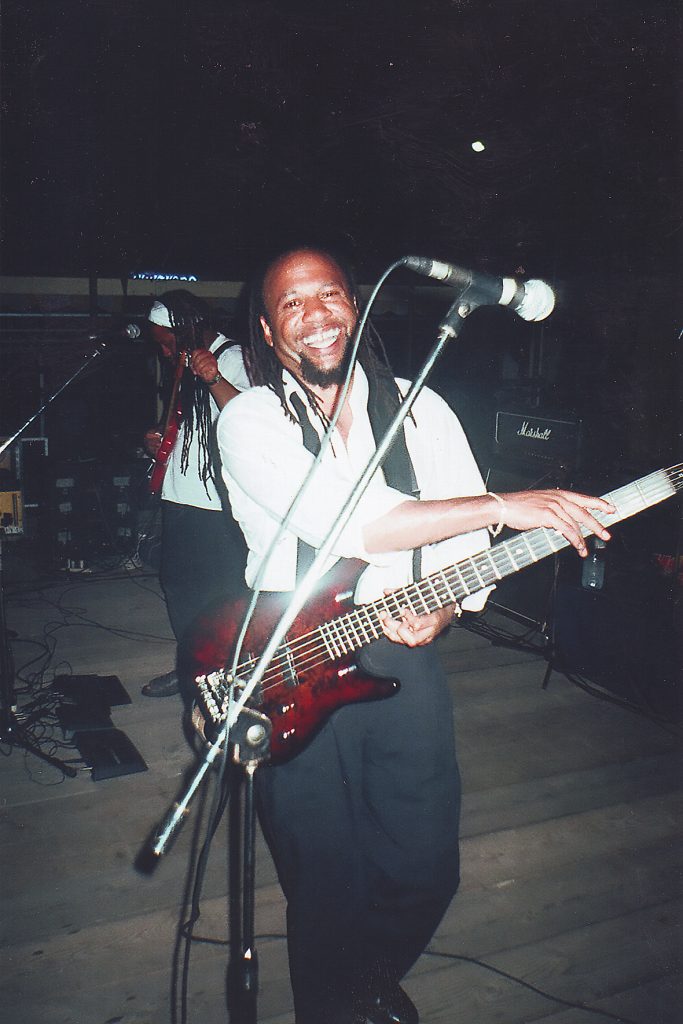
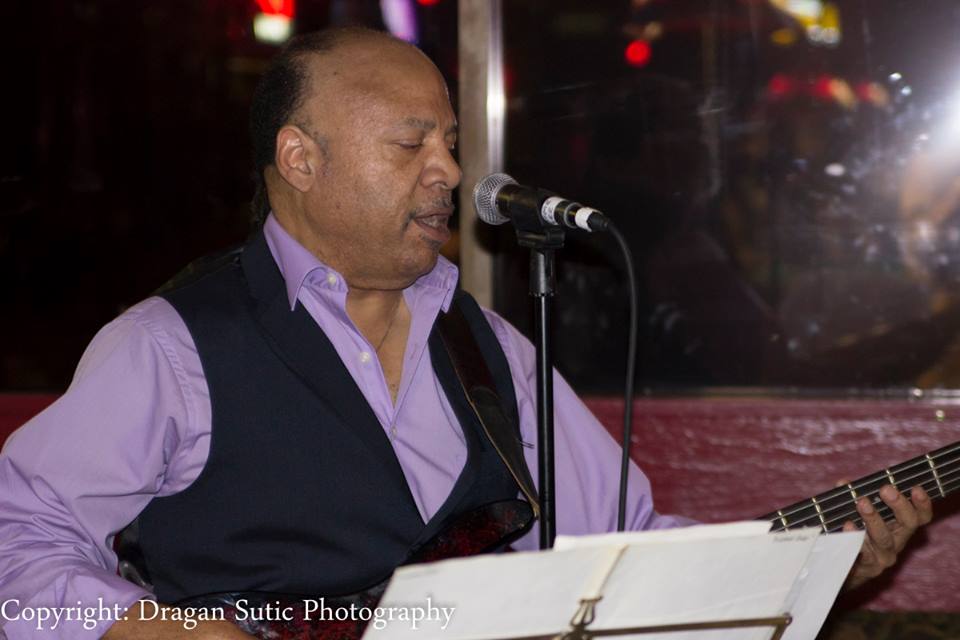
Jerome Lee leading his group “Jerome Lee City” in concert in Sardinia, Italy 1998Jerome Lee performing at his solo bass guitar show in Las Vegas, Nevada 2014Jerome Lee leading his open mic/jam night at Bourbon Street Blues Club Amsterdam, the Netherlands, 1999Jerome Lee in a duet concert in Las Vegas, Nevada, 2016
It was the best of times, and the worst of times, all at the same time; my days in Los Angeles in the mid to late 1980’s. I was playing the bass in several bands, sometimes different gigs in the same week with different bands. So crazy. Oh, and recording too, I learned to keep a “bass mobility kit” together for those last-minute studio calls when they happened. Word of mouth around Los Angeles about you as being a good bass player will help facilitate this, I quickly learned.
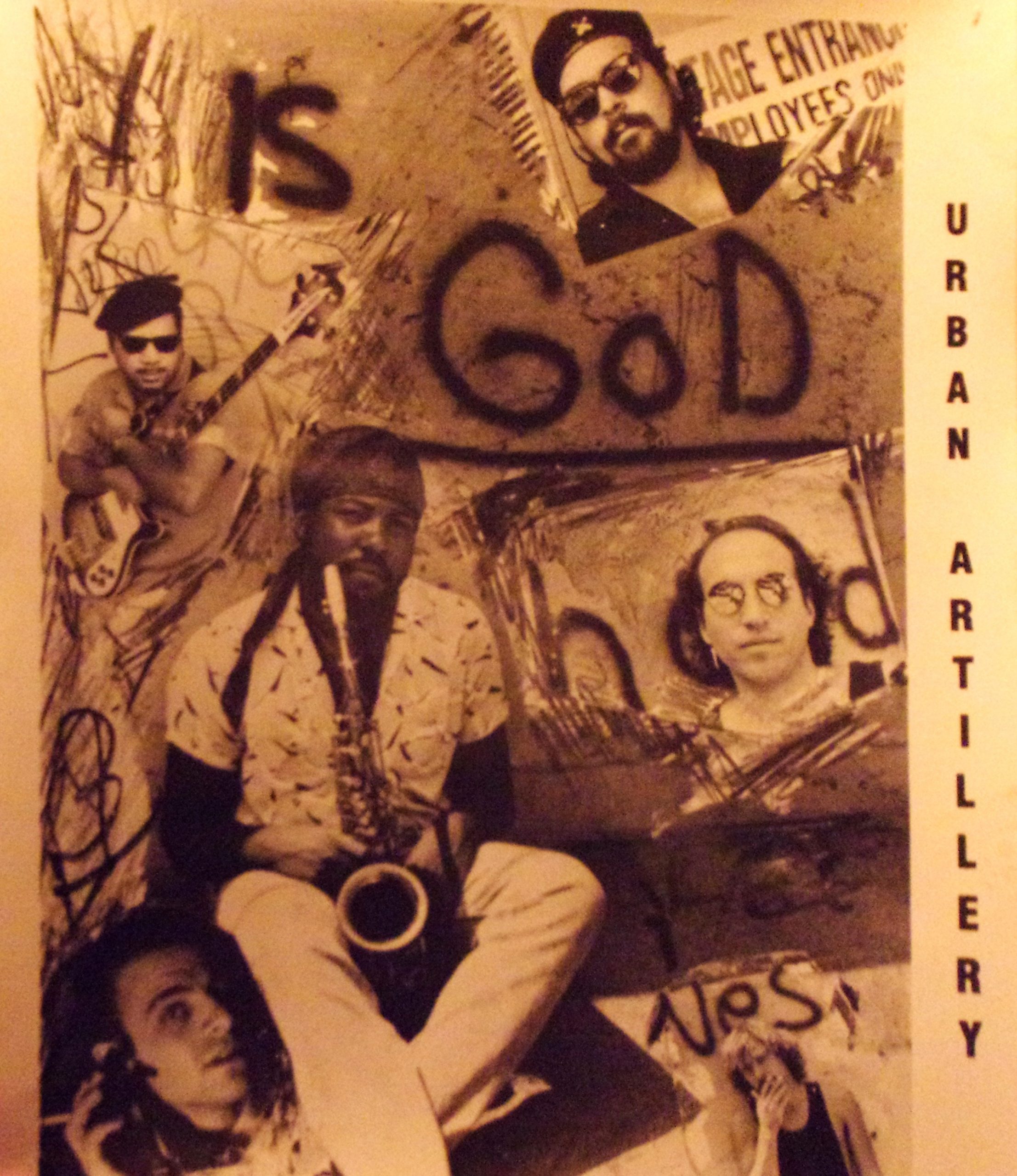
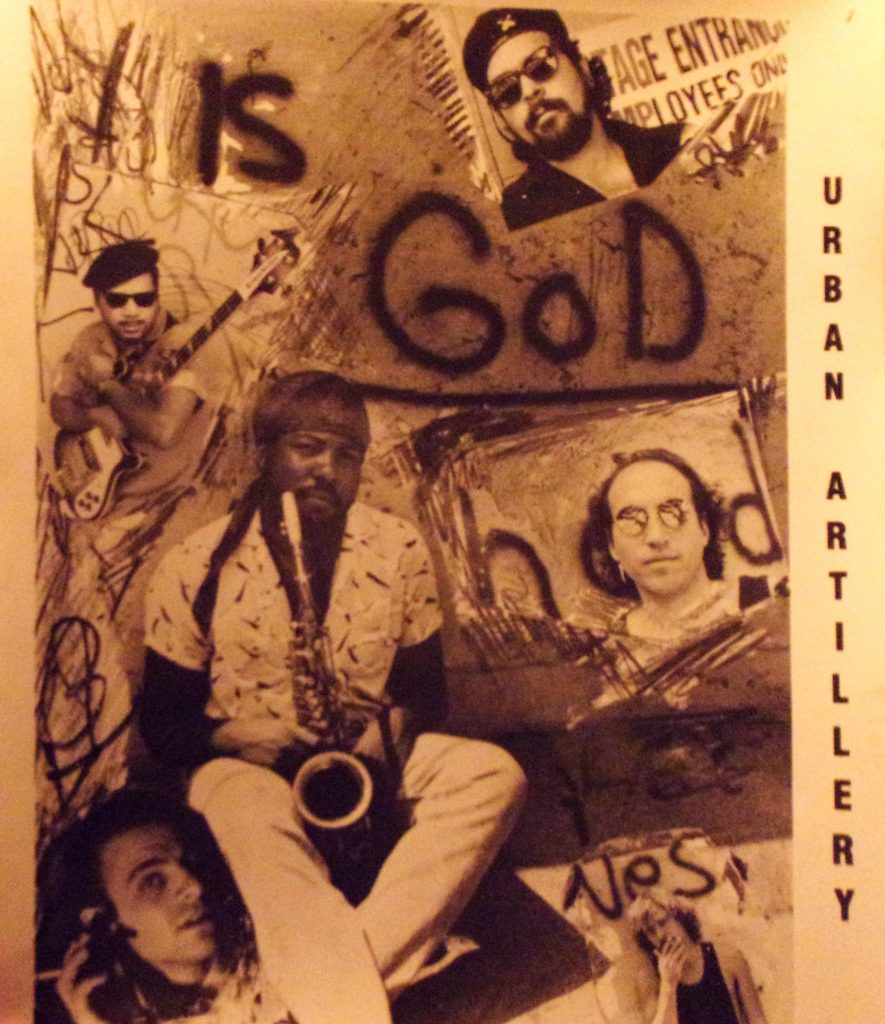
The festivals in the city were a joy to play at; the Sunset Junction Street Fair, and the West Hollywood Street Fair, among others, were the best, to me. There were other festivals, but those two stood out during my days of playing bass with the band known as Urban Artillery. I saw that the band was asked to return to those festival band line-ups for a few years running during the late 1980’s into the early 1990’s.
I loved playing in this band, as I was one of its two (yes two) electric bass players, and the drummers that did pass through the band were simply amazing. One drummer who played with the band at a West Hollywood Street Fair concert one year went on to play drums in the touring band for Kris Kristofferson. And yet another drummer who joined the band for a concert performance at the Sunset Junction Street Fair went on to play drums in the band called 4 Non Blondes. The band had a strong social message and stage presence that many people in Los Angeles took to and really liked.
The festival’s organizers liked the raw power of the band; they liked its originality and its style. I remember a couple of memorable performances at the West Hollywood Street Fair, and one in particular where I, the keyboard player, and the lead singer, were jumping really high into the air on stage during a particularly rousing song. The lead singer did a jump with a kick that launched one of his shoes at least 40 feet back into the audience.
We found it hilarious as a band, and wouldn’t you know it, someone in the audience returned the lead singer’s shoe after the band’s performance that afternoon. That’s the kind of people who attended these festivals back then; they loved the bands and saw them all as original with something to say, and stars in their own right whether they became big or not.
It was the worst of times because of the nature of the music industry itself. It is an extreme hit or miss industry, and those who miss find it hard to move forward, but not always. As a band, just because you miss once or twice back then didn’t mean that you weren’t going to get another shot at the big time.
This was Los Angeles after all, one of the key cities in the country to make a way forward in the music industry. And some of the bands there did move forward with their careers in music; a couple of them are still together today from back during those years that I lived there. And they still sound great. But not all of the bands made their way forward; not all of the bands found a lucrative career in the music industry. It was a tough way of living for me as well as so many other musicians that I knew back then.
Throughout the passage of time though, I have seen many of the band members from several of the bands that made music in Los Angeles back in those days on today’s social media, and one thing is in common between those days and these times. Our love to play music is above all else, and in the end, it didn’t matter so much whether there was a lucrative music industry deal or not. What did matter was the fact that we were and are musicians first, and we continue to compose and play the music that comes from our hearts, spirits, and souls.
And that’s a pretty good place to be.
The single “Beautiful Country” by Urban Artillery in Los Angeles, CA, 1988Urban Artillery in Los Angeles circa 1988