Bassist Jerome Lee’s Archive Blog

  • Los Angeles Days I (Originally posted on September 11, 2016) 

    Los Angeles Days I (Originally posted on September 11, 2016) 

    It was the best of times, and the worst of times, all at the same time; my days in Los Angeles in the mid to late 1980’s. I was playing the bass in several bands, sometimes different gigs in the same week with different bands. So crazy. Oh, and recording too, I learned to keep a “bass mobility kit” together for those last-minute studio calls when they happened. Word of mouth around Los Angeles about you as being a good bass player will help facilitate this, I quickly learned. 

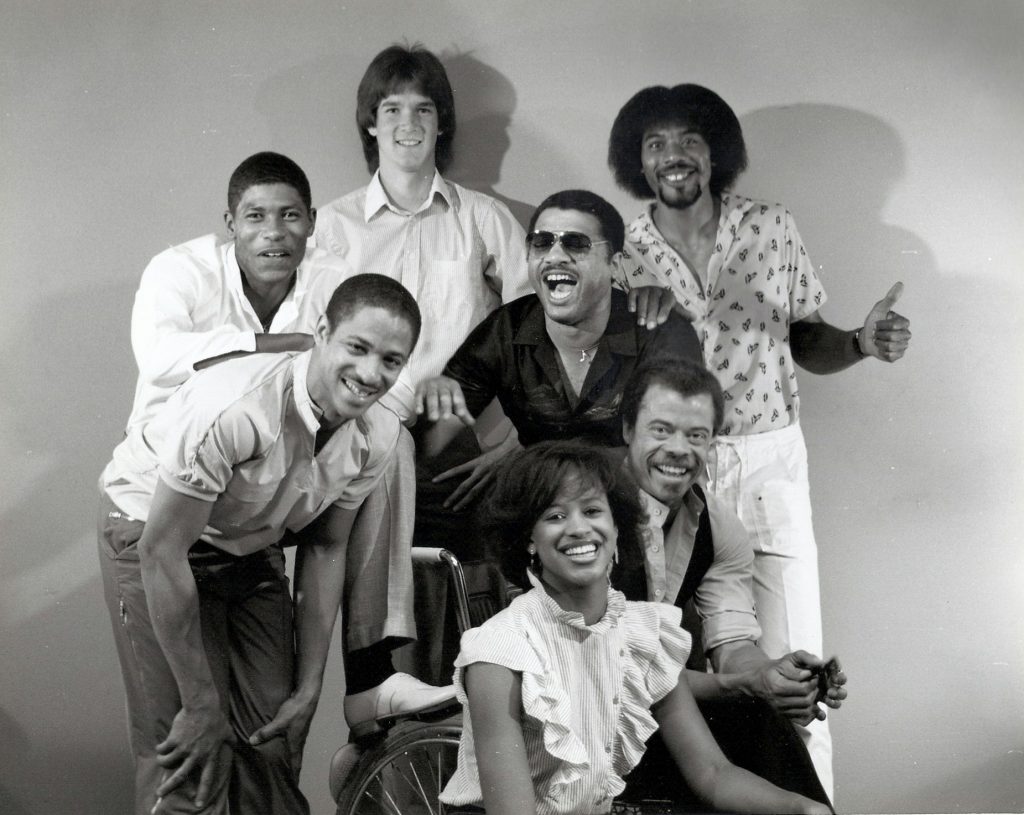
      The festivals in the city were a joy to play at; the Sunset Junction Street Fair, and the West Hollywood Street Fair, among others, were the best, to me. There were other festivals, but those two stood out during my days of playing bass with the band known as Urban Artillery. I saw that the band was asked to return to those festival band line-ups for a few years running during the late 1980’s into the early 1990’s. 

      I loved playing in this band, as I was one of its two (yes two) electric bass players, and the drummers that did pass through the band were simply amazing. One drummer who played with the band at a West Hollywood Street Fair concert one year went on to play drums in the touring band for Kris Kristofferson. And yet another drummer who joined the band for a concert performance at the Sunset Junction Street Fair went on to play drums in the band called 4 Non Blondes. The band had a strong social message and stage presence that many people in Los Angeles took to and really liked.   

      The festival’s organizers liked the raw power of the band; they liked its originality and its style. I remember a couple of memorable performances at the West Hollywood Street Fair, and one in particular where I, the keyboard player, and the lead singer, were jumping really high into the air on stage during a particularly rousing song. The lead singer did a jump with a kick that launched one of his shoes at least 40 feet back into the audience. 

    We found it hilarious as a band, and wouldn’t you know it, someone in the audience returned the lead singer’s shoe after the band’s performance that afternoon. That’s the kind of people who attended these festivals back then; they loved the bands and saw them all as original with something to say, and stars in their own right whether they became big or not. 

      It was the worst of times because of the nature of the music industry itself. It is an extreme hit or miss industry, and those who miss find it hard to move forward, but not always. As a band, just because you miss once or twice back then didn’t mean that you weren’t going to get another shot at the big time. 

      This was Los Angeles after all, one of the key cities in the country to make a way forward in the music industry. And some of the bands there did move forward with their careers in music; a couple of them are still together today from back during those years that I lived there. And they still sound great. But not all of the bands made their way forward; not all of the bands found a lucrative career in the music industry. It was a tough way of living for me as well as so many other musicians that I knew back then. 

    Throughout the passage of time though, I have seen many of the band members from several of the bands that made music in Los Angeles back in those days on today’s social media, and one thing is in common between those days and these times. Our love to play music is above all else, and in the end, it didn’t matter so much whether there was a lucrative music industry deal or not. What did matter was the fact that we were and are musicians first, and we continue to compose and play the music that comes from our hearts, spirits, and souls. 

    And that’s a pretty good place to be.

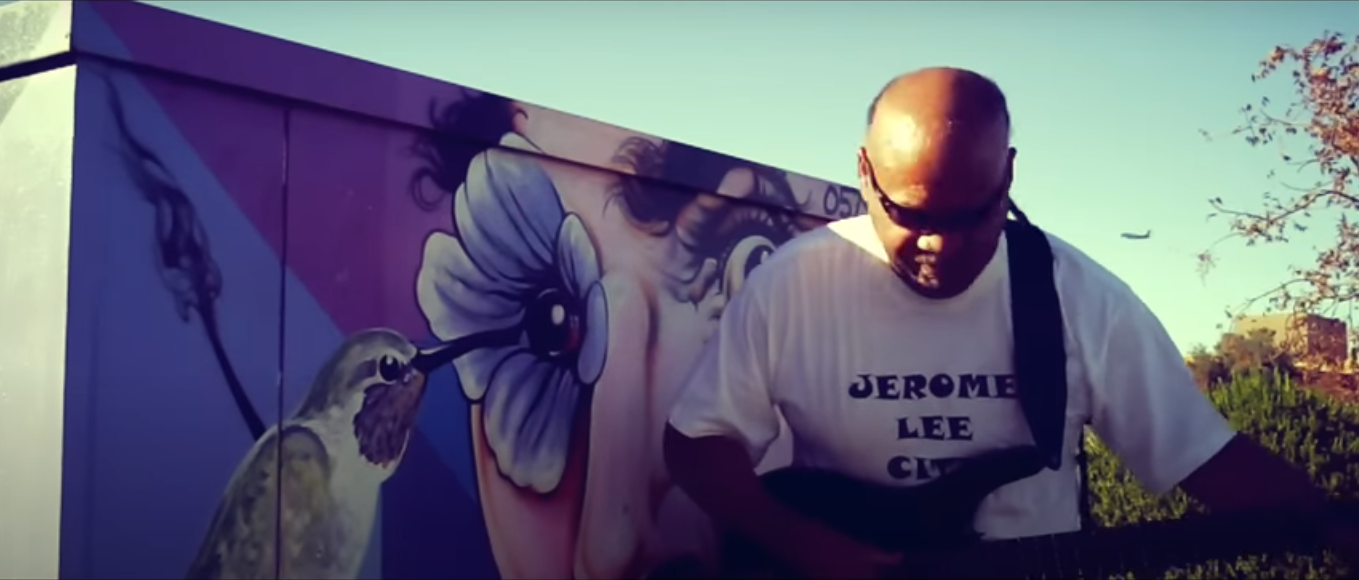
    The single “Beautiful Country” by Urban Artillery in Los Angeles, CA, 1988
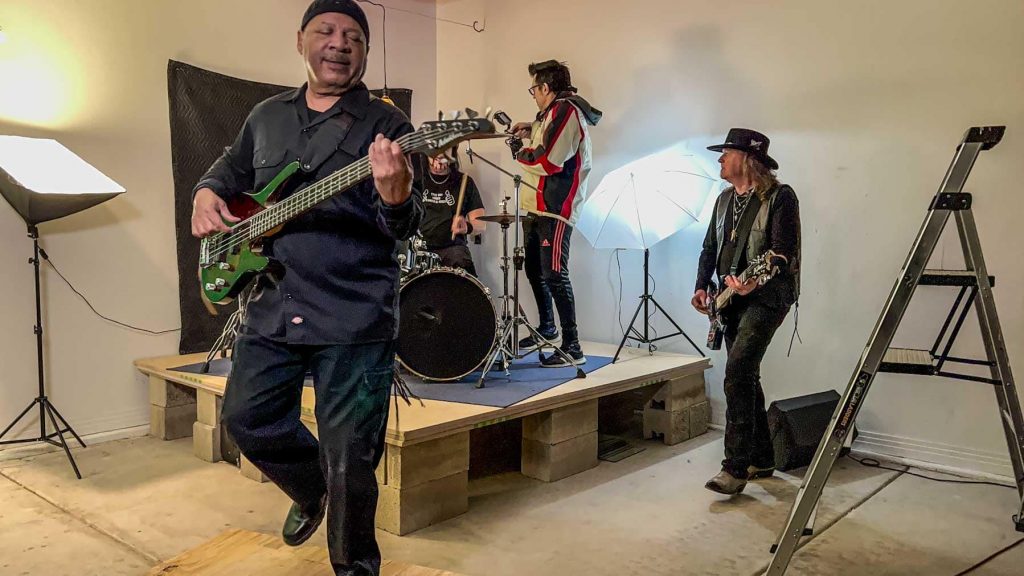
    Urban Artillery in Los Angeles circa 1988
  • My Sisters (Originally posted on September 4, 2016) 

    My Sisters (Originally posted on September 4, 2016) 

     I did not grow up as an only child; I had sisters and a younger brother around me. My two older brothers were old enough to be out and living on their own by the time I had discovered my interest in playing the bass. I have two older sisters closer to my own age, and one younger sister. I speak of them lovingly here because of their unknowing involvement in my musical development, in my bass playing. 

      My two older sisters were the ones to go out and buy all the new recordings of the day. Back in the late 1960’s and early 1970’s music spoke loudly to the masses, and if a person wanted to be in touch with what was considered cool, they had to know about the latest release of certain songs, or more specifically, the messages contained in the latest releases. My older sisters brought home so many records during this time; we listened to 78RPM, 45RPM, and 331/3RPM discs as often during the days and nights as possible. My sisters were quick to point out the message in the music to us younger ones; they were trying to get us in touch with the times that we were living in, trying to bring us up to date in a way. 

      As the love of music by my older sisters unfolded in front of me, there was all kinds of music that they brought home from the record stores; it was every genre, and they did not discriminate. Lots of soul and funk music, lots of r&b, lots of rock, lots of Latin soul, lots of blues; even Caribbean and Reggae music, found its way onto the turntables in the house. It helped to have a couple of inexpensive turntables in a couple of different rooms in the house. I remember the Christmas that my older sisters received a new turntable setup for their records; they were ecstatic, and that was when an intense musical education began for me. 

      The year that I got my first electric bass guitar and bass amplifier, I began to learn how to find the bass notes that I heard being played on the many records in my older sisters’ large record collection. I was taking electric bass guitar lessons from a neighborhood music teacher, he was great, and he taught me the fundamentals of playing the bass that stay with me to this day. But at the time, those fundamentals were also helping me to understand the role of the bass guitar in a group or band setting before I had even joined my first real band. In the school system that I went to at that time, I was also playing the upright bass in the school orchestra, and reading scores with bass notation printed on them. I used to think at first that this was the way that I was going to interpret music during my lifetime, by reading scores and playing in orchestras. 

    But learning to listen by ear and to try to copy the bass line that I was hearing on all of these different records was a huge revelation to me. I learned so much; that all the recordings were not recorded and mastered at the same level; the fact that all of the recordings were done to analog tape, and thus the overall tuning pitch would vary from record to record; the fact that the bass track on the record could be sitting either very forward or very far back in the overall mix. Before playing along to some of my favorite LP records, I would have to play a sample of a song to get a reference note to tune my bass to, and after I had re-tuned my bass, I would then play along with the entire record. 

      I learned so many different songs in those earliest years of my bass playing, and it turned out to be a real gift to me later on. Sometimes on weekend nights, when me and my sisters and brother had time, I would get my bass and small bass amplifier out and set it up to play along with the favored records of the day. We all loved to dance, and when I was playing along on my bass to a really popular song, the low end was much more fun to dance to; everybody wanted to dance to that record. My sisters began to marvel as I learned so many songs note for note on my bass, and after doing this for a couple of years, they couldn’t tell if I was playing along or not, especially if my bass amplifier’s level matched the stereo’s volume level. We would all laugh at that experience; it was fun for us all. 

      I found that all my sisters became my first fans, and when the adults would gather at the house on weekends and during the summers, my sisters would tell me to go and get my bass and amp to set up and play along with their favorite records. It turns out for most every musician that your family is your first audience, and to play my bass in front of the adults was as much a thrill to me as it was for them. They responded well, and they gave me encouragement to continue to play the bass. Because of the kindness of all of my sisters, I had a positive start to my early bass playing life. It is because of them that my mind was opened up through music to the times that we were living in. They showed me that there is a message in the music that we hear. They tried to get me to listen for a message each time I listened to music, and that sometimes I would have to listen a few times to a song before I really understood it. That there is a message in the music. And there is. 
    Thank you, my sisters, I love you.

  • The Bass (Originally posted on August 28,2016) 

    The Bass (Originally posted on August 28,2016) 

    The Bass. My love for the instrument goes back many years now. In fact, when I got my first electric bass guitar, the electric bass guitar itself as an instrument had been sold to the public for only 19 years. So, I started early in my life with an instrument that was still relatively new to the general public. 

      Oh yeah, the Beatles and the British invasion had come to America and done their thing, and people bought more and more musical instruments, bass guitars among them. Motown Records and Stax Records were hot too, and their artists inspired many other people to take up an instrument of their choice. There was a lot of inspiration coming from the artists and the music of the mid 1960’s that in turn launched the next movements of music in the country. 

    The LP records that my older sisters bought had us kids dancing and playing lots of air guitar (and bass). I remember some of the names of the early electric bass guitars that I saw as a kid; Gibson, Fender, Hagstrom, Rickenbacker, Kay, Danelectro, Carlo Robelli, Guild; even department store retailer Sears had their own name brand guitar (the Silvertone) on offer. I was seeing the bass being played by both men and women, but at that point in my young life I did not yet own one myself. 

      It’s because my first instrument (after learning to play the flutophone/recorder) was the viola and my future thoughts about it at that time in my life were the reason why I did not have a bass guitar. I was in the elementary school orchestra, and my music teacher was giving me lessons on the viola that were having a positive impact upon me. I mean, I was getting a good tone on the instrument at an early age. My young fellow orchestra players liked my sound. And as the neighborhood kids I went to school with would watch me carrying my viola in its case back and forth from school on the bus, one day they challenged me to play it in front of all of them at our bus stop one morning. 

    It was cold and snowing that day, with a good amount of snow already on the ground, and more coming down. I grew up on the east coast, on Long Island, and the winters there could be rough sometimes. But I was undaunted in front of those kids that morning. I had been practicing my scales and etudes. I had been rehearsing with the school orchestra. And like I said earlier, I had a good tone on the viola. 

      Snowing or not, I set my case down in the snow, and I took my viola out of the case with no hesitation, quickly tightened up the bow a little and then proceeded to play Greensleeves right in front of them all. I knew the song from memory, so I played it down. A good tone goes a long way, and the kids became excited and clapped their hands after I was done playing the piece. 

    That moment and that day put me on the road to thinking that the viola was going to be my instrument for life. From my sixth-grade year going into my seventh-grade year, I began to imagine my future self having finished college with a music degree and dressed nicely in a tuxedo playing the viola with a fine orchestra somewhere and making a good living doing just that. While those were good thoughts to have about a future playing the viola, life has its own way of stepping in and changing the circumstances of how we live out our musical lives. And step in it did. 

    Arriving at my school district’s junior high school as a seventh grader, viola in hand, I thought that I would begin to learn to play more difficult music on the instrument. I noticed this starting to happen in elementary school; the music became more difficult to play with each grade we advanced as students. I was alright with that; I simply wanted to get better, to sound better on the viola. About a month and a half into the new school year though, that’s when life stepped in, and brought along its change for my own musical life, and a profound change indeed.  

      The junior high school orchestra had a good sound to me, and we were learning to play in tune much better than in elementary school. I could easily hear when we were not in tune as a viola section, and if too many mistakes were made, the conductor would then stop the orchestra and make the viola section play their parts alone as a section. This of course would single out those who needed to work on that particular piece as a player or would help to clear up issues like timing. While this was going on, I was concentrating on the viola part in front of me, and I really could not hear the entire orchestra from my chair in the viola section. But my conductor could easily hear the whole orchestra, and he was beginning to have an issue with another section of the orchestra, the upright bass section. Why? Because there was only one upright bass player in the orchestra at the time! Of course, it would be difficult to hear his parts when everyone played. So, what did the conductor do? He asked me privately one day at school to consider learning to play the upright bass. “I can’t hear the bass parts when we play our pieces, and I think that you might be a good bass player if you give it a try.” He added, “If you don’t like playing the bass after the Winter Concerts, it’s ok, you can go back to playing the viola and we will be fine.” 

      Looking at the sheer size of the upright bass made me wonder how the students in the elementary school orchestra were even able to play it. I was used to the size of the viola, and the size of its strings. “Why play such a large instrument?” I thought. But the key to this time in my life was my music teacher, who was also the school orchestra’s conductor. He spoke to me in a kind voice, and it was ok for me to make a mistake on the bass while I was learning to play it. He showed me how to read the f-clef (bass clef), because during my years playing the viola I had learned to read the c-clef (alto clef). I quickly began to look forward to having our music lessons at school, I remember learning the Arco techniques, which is playing with a bow, and how I struggled with trying to get a decent tone on the upright bass. It seemed much easier for me to play the Arco techniques on the viola. One day, during a bass lesson at school, I was holding the upright bass rather far away from my body and holding it like that makes it even more difficult to play. I was struggling that day, and I did not know why. 

      But my bass teacher saw exactly what was going on, and why I was struggling to play. He came up behind me, grabbed the body of the bass with one hand, and my shoulder with the other and brought the upright bass right up against my body. Then he said to me, “Hold this instrument close to you like it’s your girlfriend!” I laughed like only a twelve-year-old kid could laugh, and no, I did not have a girlfriend at that time. But I certainly got the meaning of what my music teacher was trying to tell me. Holding the upright bass close to my body made all the difference in my playing as I could really feel the deep vibrations that emanate from its great size. 

    And the idea of holding the instrument close to my body was not lost on me. From then on, it mattered more to me, in more than just a physical sense. It also mattered in my life’s perspective as I began to love playing the upright bass from then on, that love was close to me too. I stayed with it, and after the junior high school Winter Concerts, I continued to play the upright bass and did not go back to playing the viola. And a year later, I finally got my first electric bass guitar, a Kimberly four string model that was violin shaped like the famous Hofner basses that Paul McCartney played in The Beatles. 

    It’s the beginnings of how I got here, and it has been my life’s instrument. 

    The Bass.

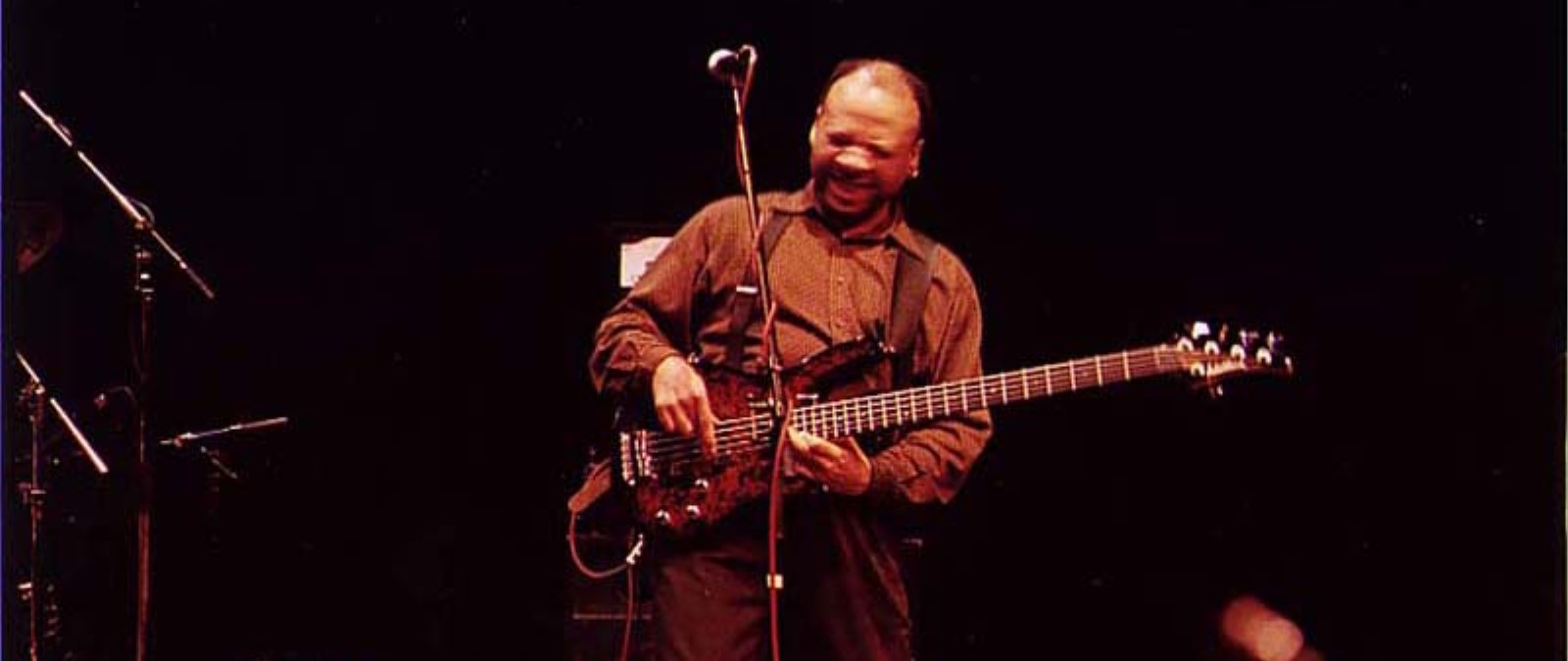
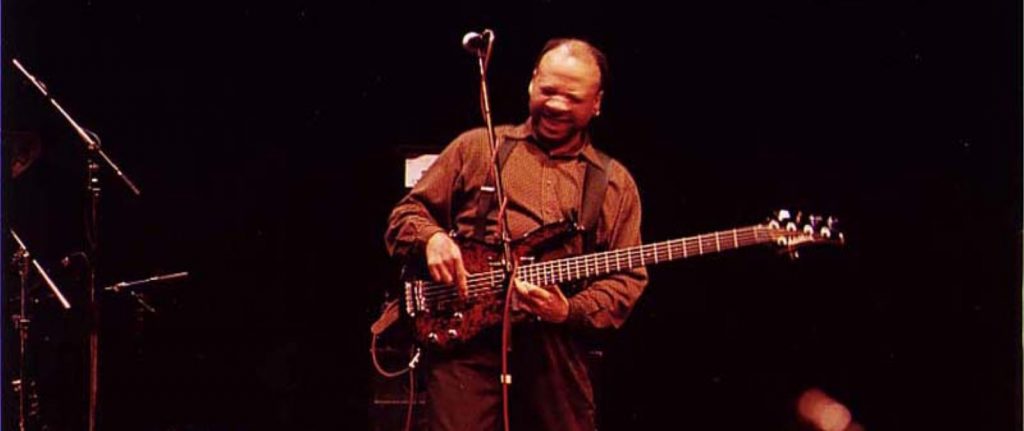
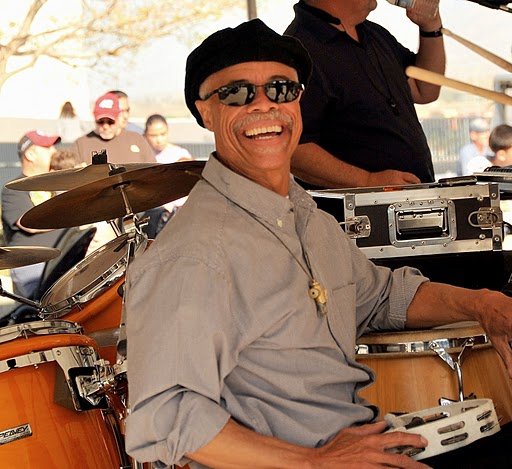
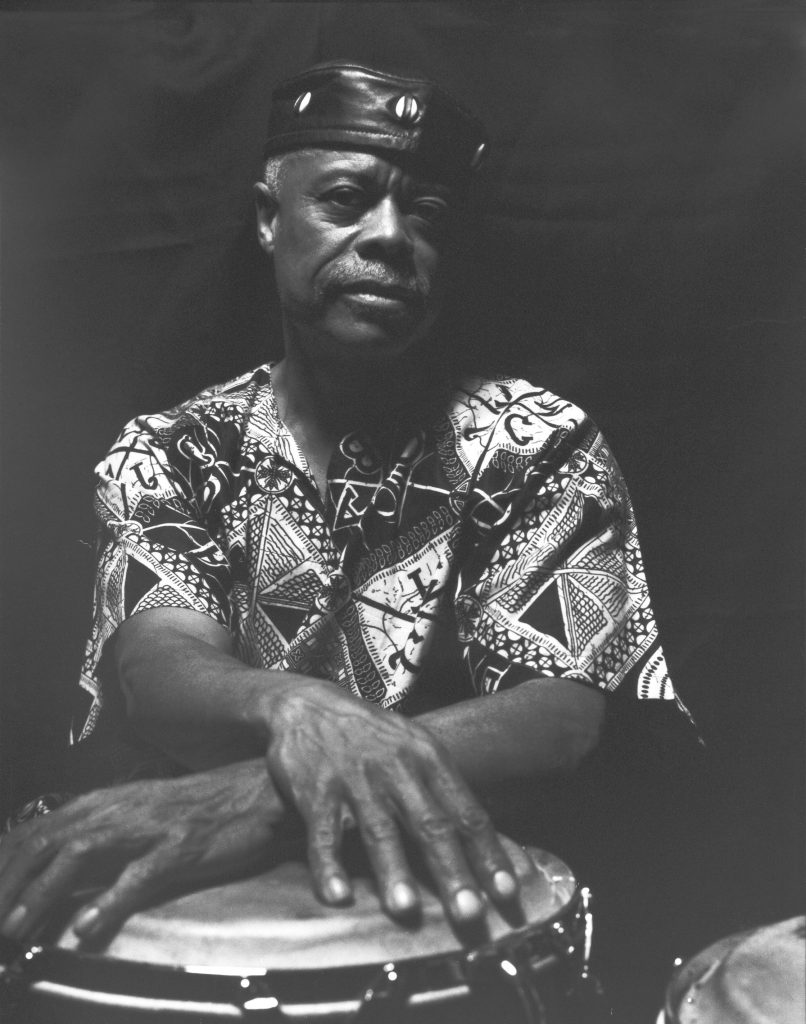
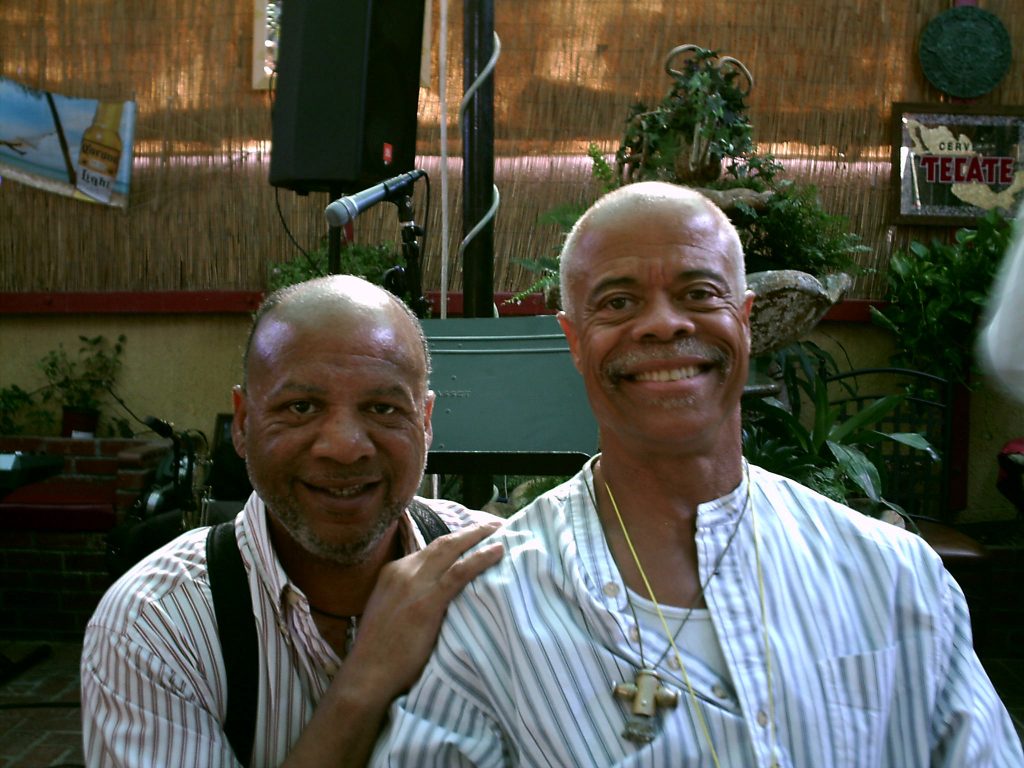
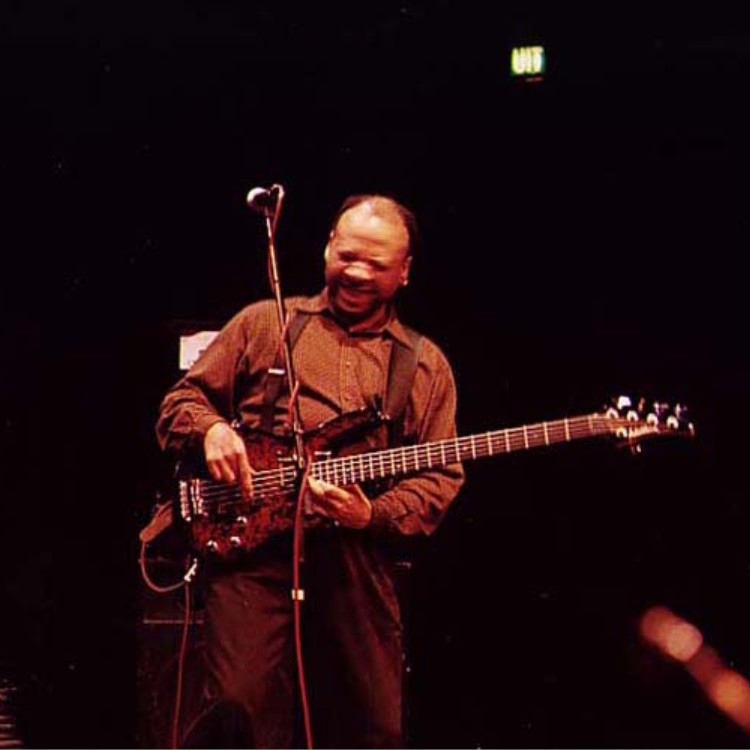
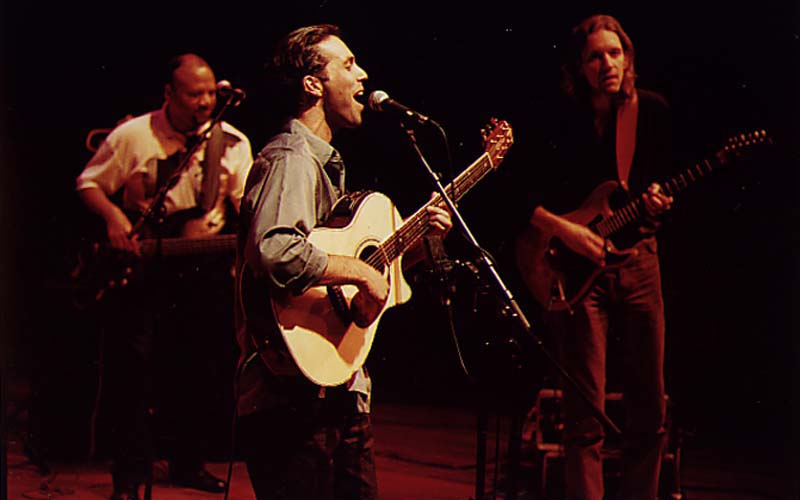
    Jerome Lee in concert in Teulada, Sardinia, Italy, 1998
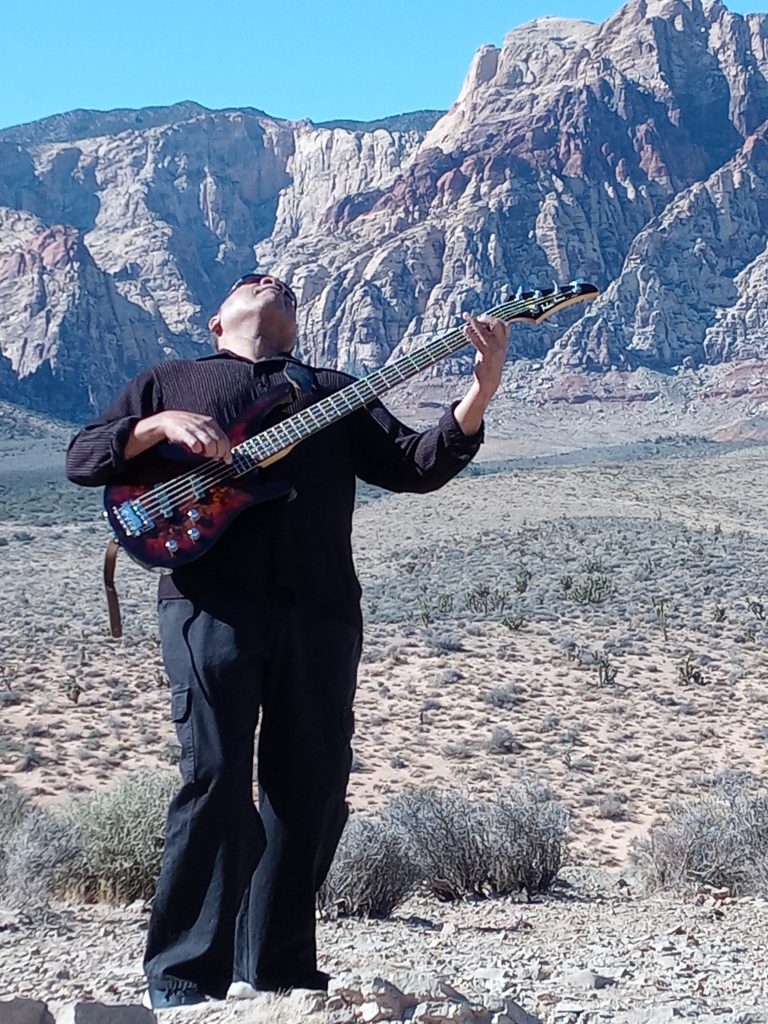
    Jerome playing the Spector NS-4 Electric Upright Bass in a studio in Parker, Colorado 2014
    Jerome Lee in a Farmingdale High School winter concert, 1973
  • Meeting Olympic Wrestlers, Music, and Rising Up (Originally posted on August 21, 2016) 

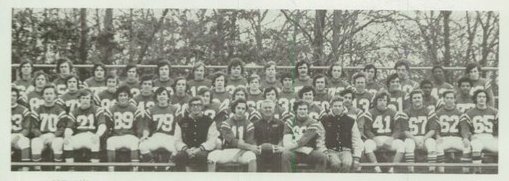
    Wrestling team Farmingdale High School 1974
    Farmingdale High School Varsity Wrestling Team 1974; Jerome is in the 2nd row, 2nd from the right

    Watching events on television of the Summer Olympics 2016 in Rio de Janeiro has got me to think about my own experience with Olympic level athletes when I was in high school. I was in my sophomore year, and my first year in high school. Back then, during my high school days, the high school freshmen went to school with the 7th and 8th graders; after finishing your freshman year you went to the final three years of your schooling at the local high school. I was interested in wrestling, and while I was in junior high school, I tried out for the team early on and made it. A couple of years of wrestling at that level would help hone your skills so that you could compete at the high school level where things become more serious. 

    My mini disaster of suffering a broken bone in my right hand during a wrestling match was still two years away, and as a sophomore wrestler there was little that I feared health wise. I was supple and strong, and tried each and every wrestling move shown to me by my coaches. We had a good team, some called it a good club, and we competed well in our division in Nassau County and on Long Island as a whole. It was a good time to be in wrestling, it seemed. I wrestled on the junior varsity team during my sophomore year, and the guys who wrestled on the varsity team were top notch athletes indeed. I remember one of the varsity wrestlers on our team that year eventually made it to the state finals in New York and placed third in the state. So, we felt as a team that we could compete. 

    What had happened at the Munich 1972 Summer Olympics was quite a tragedy and unfolded in front of the whole world. You can look it up; I won’t get into the horrible details here, but some of the lives that were lost were wrestlers. Although they were not wrestlers from the U.S., I and other wrestlers really felt the loss; we were filled with sorrow for such a loss of life. I watched on TV as the Munich games continued that year, and cheered for the wrestlers, from all of the nations really. The U.S. Olympic wrestling team did bring home some medals that year and I had no idea that I was going to meet a couple of these wrestlers during my sophomore wrestling year in high school. 

    Our high school coaches knew some of the people at the New York Athletic Club and had arranged for some of the U.S. Olympic wrestling team members to come to our high school and work out with us. They came to a couple of our practices that we regularly had on Saturday mornings during our wrestling season. It was amazing to me to wrestle athletes who had competed in the Munich 1972 Summer Olympics and had won medals. I watched our powerful varsity team members get thrown about, seemingly with ease by these fantastic wrestlers. I got my chance to wrestle too, and I was thrown about with ease as well. I have never put my hands on a person so strong, so fast and seemingly immovable on a wrestling mat as those from our U.S. Olympic wrestling team. Learning from those wrestlers was one of the greatest sports experiences of my life, if not the best. 

    During that 1972-1973 wrestling season, our high school wrestling team did quite well; its division competitions and league championship efforts revealed a team of wrestlers with some real heart, drive and dedication in what they believed. I wrestled as well as I could, and did well, and my coaches were pleased with what I had done as a young sophomore wrestler that year. 

    So, when I look at this year of 2016 and its Summer Olympics in Rio de Janeiro, I am reminded of the deep sacrifice an athlete must make to rise to the top of their sport. And it makes no difference if one is male or female, the effort required to rise to the top is the same for both. This realization that I had garnered from my wrestling days did find its way into other areas of my life, and my music life was included into this way of thinking. 

      I knew that I would have to sacrifice and train hard in order to find a way to rise up to the top of my musical profession. And when I say to the top, I mean this in a musician’s sense; I do not mean this in a music business sense. I don’t mean the top of some chart, or the most record sales, or the most public admiration. What I do mean about rising to the top in a musician’s sense is finding myself continuing to learn music, continuing to learn to play better on my chosen instrument, to take the risks required of me as a musician to break through with an original style, to do my best, and to bring joy to others who listen to my musical efforts. What I mean is to rise to the top of my own musical capabilities. 

      I have found myself playing music in many different places around the world, to many different people in our world. This takes some courage and confidence as an artist and musician to do. And rising up to the best of one’s abilities is the most that anyone can ask of us, and it is the most important thing that we can ask of ourselves. So, whether you are an athlete or not, play music or not, remember to seek to rise up to the top level of your ability in your life as best you can. Rise up to your own unique abilities, yes; they are yours and yours alone. 

    Rise up.

    Video of John and Ben Peterson of the USA Olympic Wrestling Team at the 1972 Summer Olympic Games in Munich, Germany.
  • For Trish Chappell and Tom Chappell (aka TN’T) (Originally posted on August 16, 2016) 

    For Trish Chappell and Tom Chappell (aka TN’T) (Originally posted on August 16, 2016) 

      After many years spent in Europe, after so many gigs and shows, after giving so many bass lessons, and after mixing audio at so many events, I got a call from my youngest sister in New York. She was calling me in the city of Amsterdam, The Netherlands, where I was living at the time. My sister dropped many hints on me during that particular phone conversation, and at long last I finally figured out that she was trying to tell me that she was pregnant with a new child. Now me, I will follow my youngest sister just about anywhere in the world. She said to me over the phone that day, “I need your help; I have my six-year-old son, my husband, and our elderly father to take care of at the same time. It’s a bit much; could you come here and help me out for a while?” As it seemed the proper time for me to leave Europe, the gigs were getting harder to come by and the money had all changed over to the monetary standard called the Euro, I went on ahead and made my way back to the U.S. in March of 2003. 

      When I arrived, I was in Newark, New Jersey. My sister and my brother-in-law came to the airport to pick me up. It was strange entering the U.S. once again, the terrible tragedy of September 11, 2001 had happened roughly a year and a half earlier, and there was still a lot of tension at the airport by the authorities as well as a lot of police and military presence at the bridges that we needed to cross to make our way out to Long Island where my sister and her husband lived. 

      After we had arrived at the house, I began my new life in the U.S. once again. I had been playing a lot of gigs and shows in The Netherlands, as well as Europe itself, and I began to look around and ask around for a new gig to play bass at. I had only been back a couple of weeks when one day my sister and my brother-in-law spoke to me about a married couple who lived just down the street from them, easily within walking distance from their house. “They have a recording studio in their basement, and they have been making music there for a while” my sister told me. I said to her that I was interested in meeting them, and so she arranged a meeting and a day or two later I walked down to their house from my sister’s house. I rang the doorbell, and a tall man came to the door and introduced himself as Tom Chappell. He asked me to come inside and then I met his wife, Trish Chappell. They were a beautiful couple; they both wrote songs and lyrics for all of the original music that they composed. 

      Tom sang and played the drums, as well as some keyboards, and his wife Trish was a singer. They had not only been in different bands on Long Island, but they had started their own group, led by both of them, and called it TN’T which stood for Trish and Tom. “Come downstairs to the studio and check it out” said Tom, as I followed him and Trish down to the studio they had set up. It was a Pro Tools based audio recording system that was residing inside of a powerful Apple computer, and Tom had all of the trappings and peripherals to connect microphones and many other outboard devices to the system and record them. I was very impressed as they played back their recordings from their first release as a couple; it was titled “Sweet Like Honey”. The sound was many things all at once to me. It was soulful, but funky; it was smooth, but the music had a grit all its own. 

       “Your sister told me that you play the bass Jerome, do you have one here?” asked Tom. I said yes, I do have one here. I then told them about my musical life as a bassist, and my many travels around the world as a musician and a technician. We hit it off as people, all three of us. I really liked their kindness, how very bright they were, and how dedicated they were to their music. More conversation that evening led to setting up recording dates in their basement studio. I began to show up with my bass at their studio in the late afternoon and stayed until the late night and early mornings to get some good bass parts down on the hard drive. Tom had been spending time coming up with bass lines on his various keyboards for me to listen to. I would then replace the keyboard bass parts with my bass guitar; we worked really well together developing the parts for each song. 
     
      On a couple of the songs, Tom had not come up with any bass lines yet, so he asked me to bring about some new bass parts from scratch, something that I love to do for brand new songs. As we continued to work together on their music during that summer of 2003, I found that I had made some new friends, and I was grateful to have both of them in my life. 

      The record that we were making was eventually titled “Something Good”. Tom had also teamed up with one of New York’s finest artists; the late great Ray Reid from the fabulous band Crown Heights Affair came in on the recording project for “Something Good” and produced a couple of its songs. I finished my bass parts for the remainder of “Something Good” once I had moved away from Long Island to Las Vegas, Nevada in the autumn of 2003. I would receive a new song template from Tom on Long Island, upload it to my recording program at home in Las Vegas, record my bass parts, and then render the audio file to match Tom’s computer operating system requirements. We got very good at this, and we became very effective with it too. 

      “Something Good” was released in 2006, and was met with critical acclaim, and a lot of new fans for TN’T were gained through that CD release. It was heralded by Bob Davis at Soul_Patrol dot com as one of the top ten releases of 2006 in the Nu-Soul category. To be well received by the public is an honor indeed. 

      Of course I listened to the music that I, Tom and Trish had made. Over and over, I listened to it, I liked it very much. But one thing that I began to notice about the recordings was Trish’s great singing voice. It is very special. There was something else great about her voice that I searched for in my mind for a while. Then it hit me one day; it was her uncanny ability to sing such great sub-hooks in the songs. You know, a tasty memorable short melody or saying that is sung within the framework of the song that seemingly becomes strong enough to be considered the song’s title by the listener. I was so taken aback by Trish’s ability to do this as she recorded her vocal parts. After a couple of years had gone by, I got the chance to ask Trish over the phone how she did that during her recordings. Was she thinking of this in advance of the music I wondered? Trish said to me that she actually was not thinking of developing those types of vocal hooks in the songs in advance, she said that she would really feel the spirit and vibes of the song and allow it to guide her musical and emotional state during her recordings. 

       I was glad that Trish had told me what was going on in her mind as she recorded her vocal parts. I continued to listen to “Something Good” for a couple of years more, and then I heard from Tom on the phone that he and Trish had started a new recording project. This time, I did all of my bass parts for the new CD entirely from Las Vegas and then sent the audio files containing my bass parts over the internet to Tom. He would then upload the audio files containing the bass parts that I’d sent him into his recording project. We worked together for a couple of more years this way of developing the music. Tom and Trish would record some scratch vocals as they went along with their projects, but the final vocals that they would record would come mostly toward the end of the recording process, when most of the music was already in place. 

      The new CD was titled “Don’t Let Go” and was released in the summer of 2014, and it too garnered positive critical and fan reviews. And once again I was taken aback by the vocal parts that Trish had recorded. She maintained her knack of being able to sing sub-hooks into the songs that made it seem as though what she was singing was the song’s actual title. So amazing to me what she sang onto the recordings. 

      Leading up to the release of the CD “Don’t Let Go”, TN’T did many live performances in the New York City area. Among the notable shows they did, the performances at the Sugar Bar in Manhattan where they brought a full live band were truly standout to all those in attendance. You see, the Sugar Bar in Manhattan is owned by the late Nick Ashford and his wife Valerie Simpson, a couple of the greatest songwriters and singers in the history of the music industry. 

      Tom told me on the phone one day that he found the crowd’s reaction to TN’T’s performances there somewhat amusing, because of the obvious comparisons that people were trying to make between theirs and Nick and Valerie’s accomplishments. While they were kind comparisons, I knew that Tom and Trish had established something new for the listeners, something fresh for those in love with the soul music of yore but still hungering for the new and modern soul music. Trish and Tom not only delivered this new and fresh soul music to the masses but gave the listener something to think about as well. Life, and its ups and downs were included in TN’T’s songs; their lyrics spoke of the things in life that so many of us go through daily as people. They sang also of hope, and they sang of love and togetherness. They had heart and soul as people, and that heart and soul found its way into their music. 

       I speak glowingly of this wonderful couple; I love them very much. We do our best as artists to give our best each and every moment that we have to share our craft with other great artists. I cherished the time that I had spent on Long Island with Tom and Trish, and I always enjoyed what we had created as artists and musicians. Sadly, Trish Chappell passed away in May of 2016, and much too soon for all of us who loved her. She was a kind and beautiful lady to all that she had met in life. My life is better for her having been in it, and I will always remember her smile and laugh; it could always light up any room. As artists and as people, we realize that the people that we love in our lives are there for but a season, and that we should embrace the people that we love in our lives as often as we can. Rest In Peace Trish Chappell, you are loved and missed by me and many others. Namaste. 

    The single “Today” by Trish Chappell and Tommy Chappell aka TN’T from their CD titled “Don’t Let Go” c. 2013 tritommusic
  • Live Universal Audio Thoughts (a blog re-post from August 2016)

    Live Universal Audio Thoughts (a blog re-post from August 2016)

      When I think about a life in pro audio, and especially experiencing live audio, there are aspects of it that, to me, are universal. When I have those times when I think about leaving a pro audio life (as I have recently), audio seems to call back to me to always consider staying. And whether I remain or leave a pro audio life, here is what Great Audio has revealed to me and my understanding.

      Audio bathes us like no other experience. When audio is present and great, what can be heard can feel akin to standing in the bright light of sunshine. When audio is present and great, what can be heard can also feel akin to standing in complete darkness, with only the stars to guide oneself.

      Great Audio, operated by persons, does not discriminate nor mind about the content of what is being delivered through its numerous designs. Great Audio attempts to ensure that all humans present are moved by it and respond to it with emotion to its delivered content.

      Great Audio does not discriminate nor mind about the distinct characteristics of the human operating it. Great Audio does not mind which nation the operator may belong to or reside in. Great Audio does not mind the shade of dermis of the operator.  Great Audio does not mind which gender is operating it. Great Audio does not mind a person’s size or weight. Great Audio does not mind if one is rich or poor, young or old. Great Audio does not mind if one’s hair is short or long, or if the operator is bald. Great Audio simply does not mind any of this. Because when all of the collective human audio operators around the world deliver Great Audio, then Great Audio is made present for all other humans in attendance to experience.

      Great Audio does mind that the operator cares. Great Audio seemingly speaks to the operator and wonders if the operator can hear its presence, and with the largest audio designs, wonders if the operator can also feel its presence as well. Great Audio cares if the operator is safety conscious, it will seemingly conform and abide to the caring operator’s wishes. Great Audio will also safely conform and abide to the caring technicians who build its on site design, appliances and apparatus.

      At live events, Great Audio seems to wonder if the operator is excited about its presence and funnily enough, Great Audio seems to be very satisfied when the operator is exhilarated by its presence.

      After many years of my experiencing Great Audio luckily around our planet, I am thankful that its working aspects and profound impact upon people will extend itself in the human experience well into the near and very distant future. And I feel strongly that this will take place, regardless of my own future career choices.

    Jerome Lee – original post from August 9, 2016, at www.jeromelee.net

    The great ventriloquist Terry Fator performing his show at the Mirage Resort and Casino in Las Vegas, NV during 2015. It may be one of Terry’s shows that I mixed inside the Terry Fator Theater during the years 2013 – 2016.

  • From Bassist Jerome Lee

    From Bassist Jerome Lee

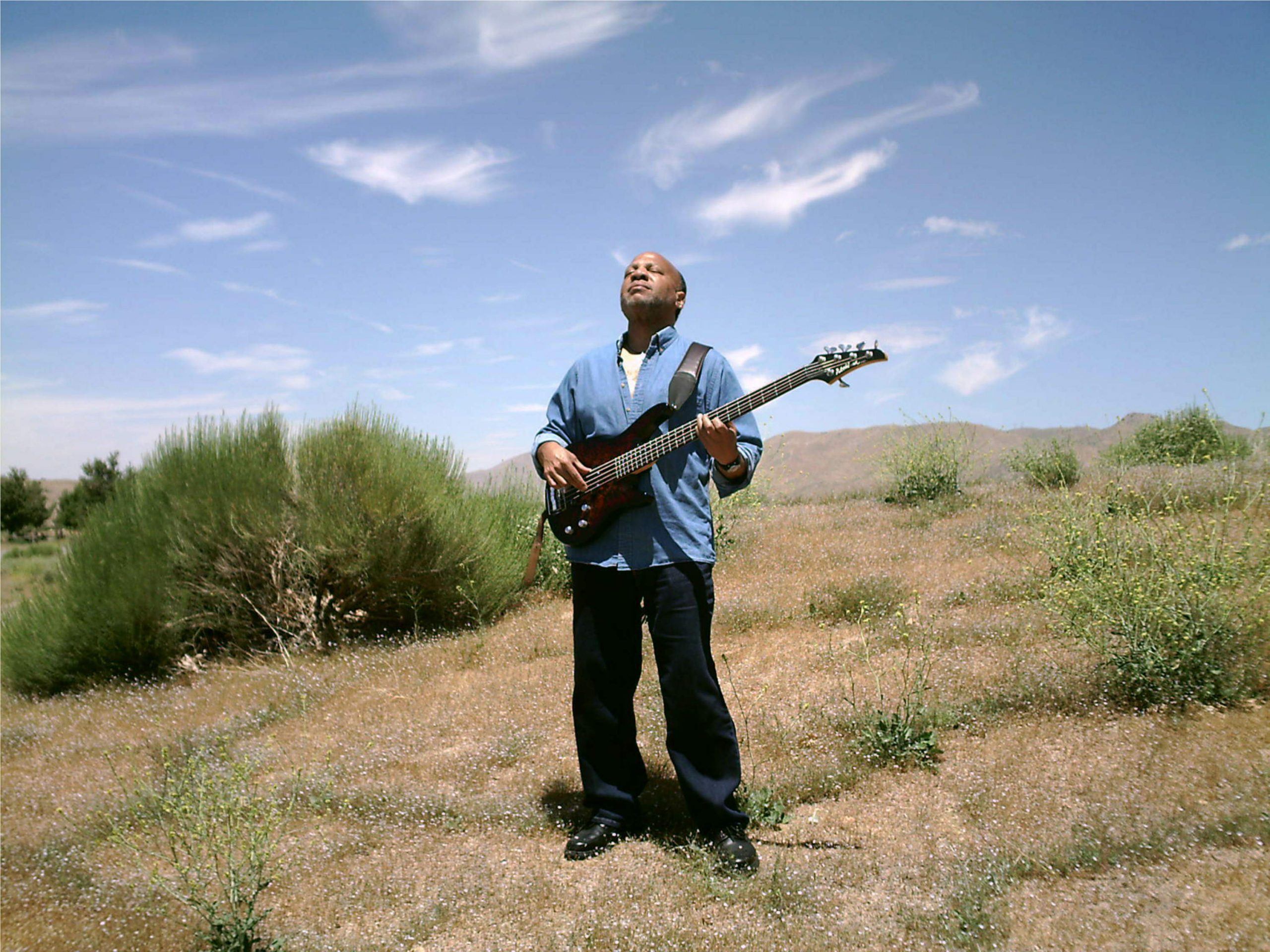
    Thank you for visiting my new WordPress site. This site serves as an extension of the Blog page at my official website. As a musician and bass player for over 50 years, I wanted to simply and humbly share my experiences in the music industry with fans of mine and music listeners alike. It has been quite a journey indeed, and I began posting blogs at my official website back in 2016. I will post blogs from that time over here and they will lead up to current blogs I have written more recently. Again, thank you for visiting!