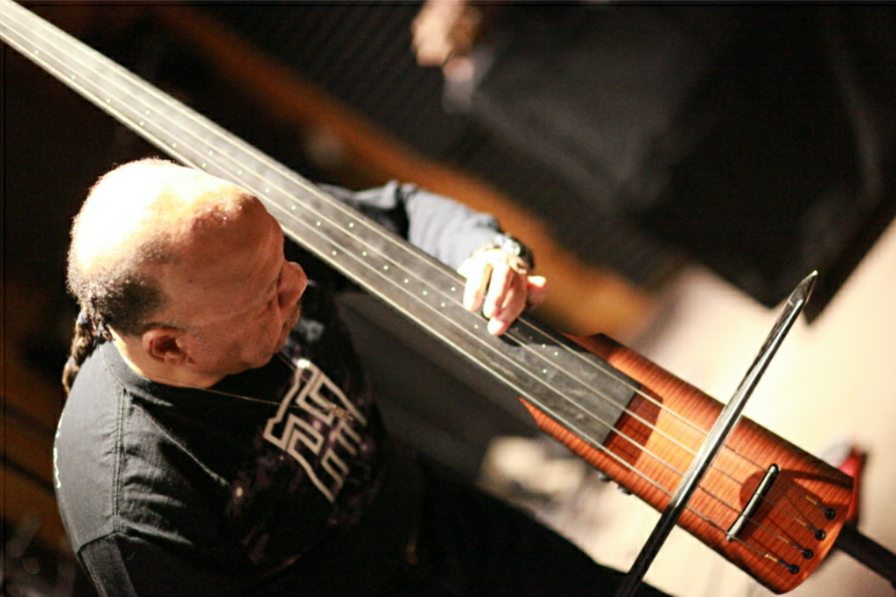
Four strings or five? Or more? That was a popular collective shout from the bass guitar playing community in the 1980’s that I heard loud and clear. How many strings on the bass would make a bass player a bass player, folks began to wonder. In the advent of the manufacturing of extended range bass guitars during the mid-1970’s and into the 1980’s, a plethora of new basses with this new range extension began to hit the market. So many new bass guitar builders came on the scene, and many of those builders are still with us today. There was choice for bass guitar players indeed. One could purchase a five stringed bass guitar with either a low open B string or a high open C string. The six stringed bass guitar became quite popular too; it had the extended range that included both a low open B string and a high open C string. For many, the six stringed bass became their bass of choice, and there are plenty of great bass guitar artists out there who have some fine solo and ensemble recordings using the six stringed bass guitar.
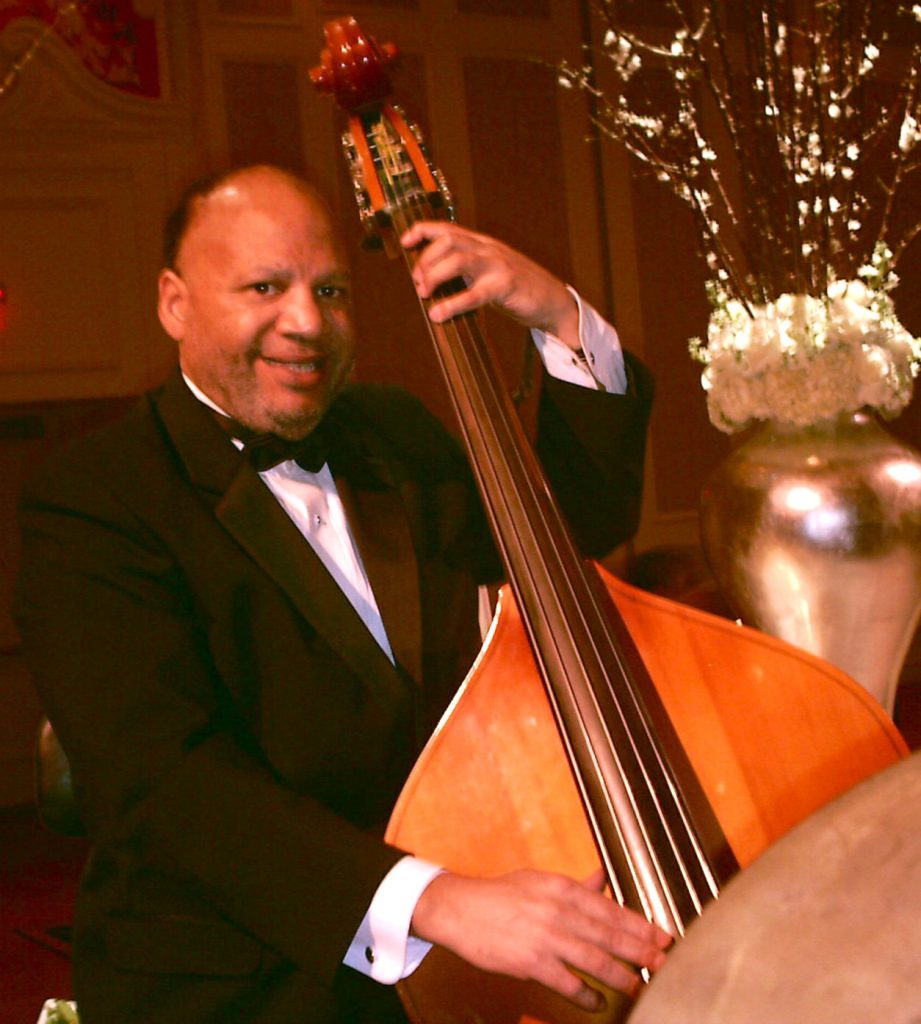
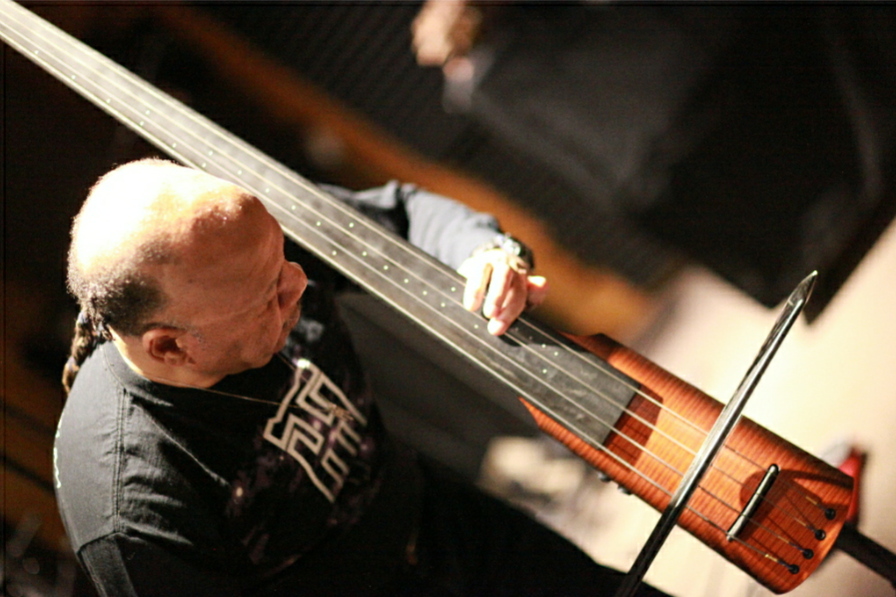
I grew up in a four stringed bass guitar world myself. Back in my youth during the late 1960’s and early 1970’s, going to the music store was always a fun adventure. I always did and still do like seeing so many bass guitars all in one place. But even with the several brands being sold out there, all of the bass guitars were of the four stringed varieties. Also, all of the bass guitar players who had risen to prominence in the music industry during those days were all four stringed bass guitar players. When I think about it, about the only five stringed basses that I saw in the music stores in my youth were not even bass guitars, instead they were the upright electric basses built by Gibson (the Baby Bass), and the Ampeg Azola (the Baby Bass designed by Steve Azola). As I remember it, both of these upright electric basses were extended range basses as they either offered or included a high open C string on these models. The exceptions that I also saw were the six stringed Fender VI baritone guitar and the six stringed Danelectro Longhorn baritone guitar. Definitely different to me, I didn’t envision myself playing an extended range bass at that time, but I thought that they sounded good.
It wasn’t until the mid-1980’s that I got to experience playing an extended range bass guitar. One of the bands that I was in during my days of living in Los Angeles actually had two bass players in the band. The other bass player in this band had a five stringed bass guitar with a low open B string on it that was built by Fodera. It was a beautiful bass guitar, and he got an excellent sound from it. When it came time for this particular band to record in the studio, the other bass player in the band offered me his Fodera bass to try on a song that he thought I would have an easier time playing, as he himself did not like so much what he was doing with the song’s bass track. So, I gave it a try, and lo and behold, I liked it. I did like it. Firstly, his bass was so well constructed that it was very easy to play. This gave me some good confidence as to what to play for the bass track on the recording. And further, I very quickly learned to understand what the notes were on the low open B string that his bass had, and how those notes related up and down the neck to the other strings on the bass. In short, it all made sense to me right away, and I was glad to realize that I could learn to play an extended range bass guitar rather well with some practice.
As the 1990’s arrived I was still living in Los Angeles, and I found myself playing in a terrific modern jazz band that had gotten a record deal and was bound for the studio. It was to be the second, or sophomore recording as it’s known, for the band leader. I arrived at the studio with my four stringed basses, and one of them was a rental bass that I wanted to try on one of the songs to be recorded. As we began to go through the songs, it became evident to the band leader that the bass guitar parts he had written out were in need of an extended range bass guitar. His charts needed a bass guitar with an open low B string extension for the bass parts to truly work and sound right. As I did not own a five stringed bass at that time, one of the well-connected guitar players in that band came up with a solution for me. He called some folks that he knew at Washburn Guitars, and he let them know what the bass guitar situation was for me. The people at Washburn Guitars responded very warmly and kindly to his request. They asked him to stop by at a location in town and pick up an extended range bass guitar that they had recently built, one that featured a low open B string. He did and brought it to the recording studio where we were to meet and continue making the band’s record.
The bass that the guitar player brought to the recording studio for me to try was a Washburn XS-5 series; it was a five stringed bass guitar with a low open B string. This bass was beautiful to look at, it sounded punchy and nice, and it had an original snap sound to it as well. The strings on this bass were also a little closer together to each other than I was used to, in other words it had tighter string spacing than my four stringed basses. But that too was ok with me. I was very thankful to the guitarist for bringing me this bass to play, and I agreed to keep this bass almost right away. It was the beginning of my first endorsement deal too, it was with Washburn Guitars, and it lasted for one year. Since time was of the essence while recording in a recording studio, I got right down to the business of getting all the bass tracks for the band leader’s recording done.
Since that recording, I have stayed with playing my Washburn XS-5 five stringed bass guitar. I also did a studio session in the early 1990’s in Los Angeles for a great blues band; and it was the first time that they had ever had a five stringed bass played on any of their recordings. This five-stringed bass traveled the world with me for many years; it became a trusted companion that I would depend upon for all of the music that I played. And with other bands, I did play a six stringed bass guitar that they had for me to play on a couple of their original songs.
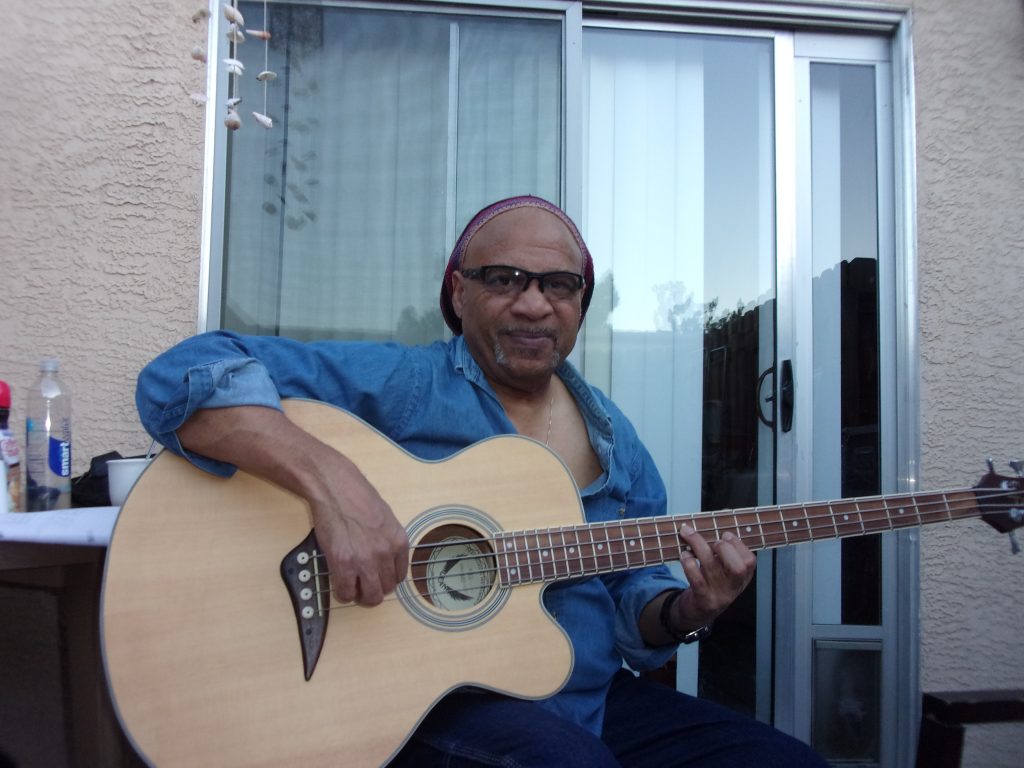
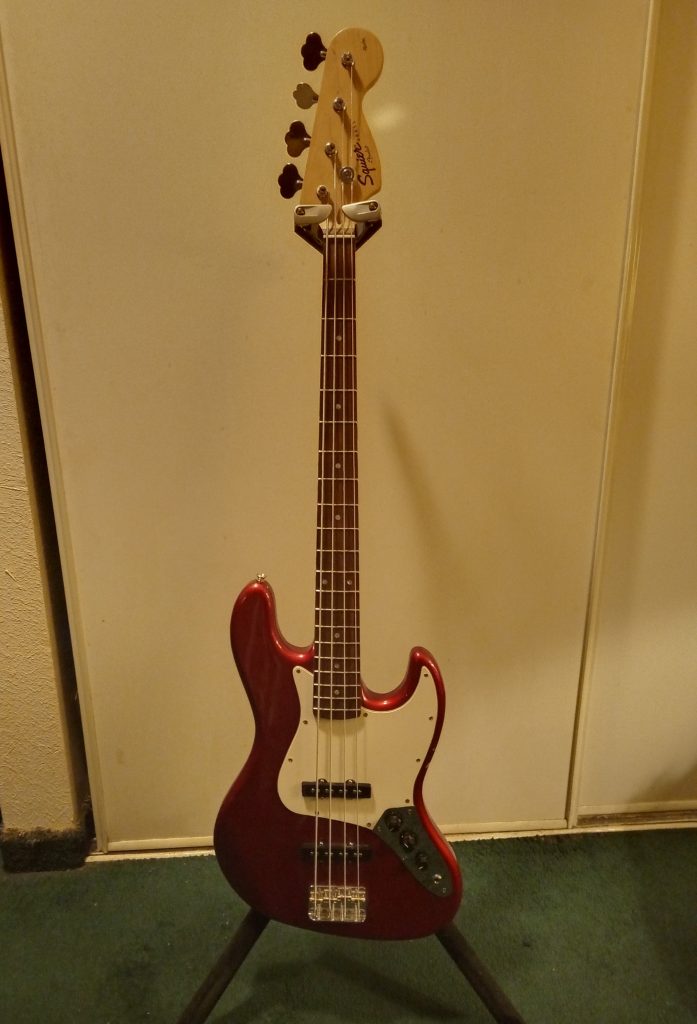
But funnily enough, I began to long for playing a four stringed bass guitar again. So, over the last few years now, I have acquired a four stringed Fender Jazz bass and a four stringed Dean acoustic bass guitar. Both of these four stringed basses keep me close to my bass playing roots, and there are some songs that I compose only for my four stringed basses. It’s funny how things have changed in the bass playing world over the years since I was a kid. But to be honest, I have been glad to receive these changes in my own bass guitar life with an open musical mind and an open musical heart.
Leave a Reply