
The Bass. My love for the instrument goes back many years now. In fact, when I got my first electric bass guitar, the electric bass guitar itself as an instrument had been sold to the public for only 19 years. So, I started early in my life with an instrument that was still relatively new to the general public.
Oh yeah, the Beatles and the British invasion had come to America and done their thing, and people bought more and more musical instruments, bass guitars among them. Motown Records and Stax Records were hot too, and their artists inspired many other people to take up an instrument of their choice. There was a lot of inspiration coming from the artists and the music of the mid 1960’s that in turn launched the next movements of music in the country.
The LP records that my older sisters bought had us kids dancing and playing lots of air guitar (and bass). I remember some of the names of the early electric bass guitars that I saw as a kid; Gibson, Fender, Hagstrom, Rickenbacker, Kay, Danelectro, Carlo Robelli, Guild; even department store retailer Sears had their own name brand guitar (the Silvertone) on offer. I was seeing the bass being played by both men and women, but at that point in my young life I did not yet own one myself.
It’s because my first instrument (after learning to play the flutophone/recorder) was the viola and my future thoughts about it at that time in my life were the reason why I did not have a bass guitar. I was in the elementary school orchestra, and my music teacher was giving me lessons on the viola that were having a positive impact upon me. I mean, I was getting a good tone on the instrument at an early age. My young fellow orchestra players liked my sound. And as the neighborhood kids I went to school with would watch me carrying my viola in its case back and forth from school on the bus, one day they challenged me to play it in front of all of them at our bus stop one morning.
It was cold and snowing that day, with a good amount of snow already on the ground, and more coming down. I grew up on the east coast, on Long Island, and the winters there could be rough sometimes. But I was undaunted in front of those kids that morning. I had been practicing my scales and etudes. I had been rehearsing with the school orchestra. And like I said earlier, I had a good tone on the viola.
Snowing or not, I set my case down in the snow, and I took my viola out of the case with no hesitation, quickly tightened up the bow a little and then proceeded to play Greensleeves right in front of them all. I knew the song from memory, so I played it down. A good tone goes a long way, and the kids became excited and clapped their hands after I was done playing the piece.
That moment and that day put me on the road to thinking that the viola was going to be my instrument for life. From my sixth-grade year going into my seventh-grade year, I began to imagine my future self having finished college with a music degree and dressed nicely in a tuxedo playing the viola with a fine orchestra somewhere and making a good living doing just that. While those were good thoughts to have about a future playing the viola, life has its own way of stepping in and changing the circumstances of how we live out our musical lives. And step in it did.
Arriving at my school district’s junior high school as a seventh grader, viola in hand, I thought that I would begin to learn to play more difficult music on the instrument. I noticed this starting to happen in elementary school; the music became more difficult to play with each grade we advanced as students. I was alright with that; I simply wanted to get better, to sound better on the viola. About a month and a half into the new school year though, that’s when life stepped in, and brought along its change for my own musical life, and a profound change indeed.
The junior high school orchestra had a good sound to me, and we were learning to play in tune much better than in elementary school. I could easily hear when we were not in tune as a viola section, and if too many mistakes were made, the conductor would then stop the orchestra and make the viola section play their parts alone as a section. This of course would single out those who needed to work on that particular piece as a player or would help to clear up issues like timing. While this was going on, I was concentrating on the viola part in front of me, and I really could not hear the entire orchestra from my chair in the viola section. But my conductor could easily hear the whole orchestra, and he was beginning to have an issue with another section of the orchestra, the upright bass section. Why? Because there was only one upright bass player in the orchestra at the time! Of course, it would be difficult to hear his parts when everyone played. So, what did the conductor do? He asked me privately one day at school to consider learning to play the upright bass. “I can’t hear the bass parts when we play our pieces, and I think that you might be a good bass player if you give it a try.” He added, “If you don’t like playing the bass after the Winter Concerts, it’s ok, you can go back to playing the viola and we will be fine.”
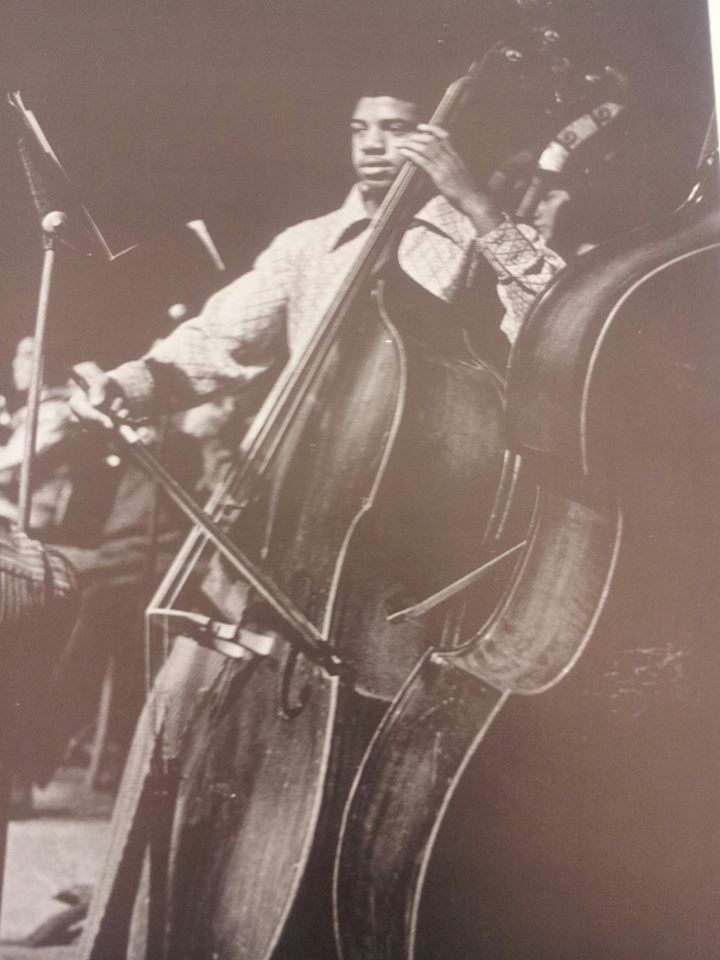
Looking at the sheer size of the upright bass made me wonder how the students in the elementary school orchestra were even able to play it. I was used to the size of the viola, and the size of its strings. “Why play such a large instrument?” I thought. But the key to this time in my life was my music teacher, who was also the school orchestra’s conductor. He spoke to me in a kind voice, and it was ok for me to make a mistake on the bass while I was learning to play it. He showed me how to read the f-clef (bass clef), because during my years playing the viola I had learned to read the c-clef (alto clef). I quickly began to look forward to having our music lessons at school, I remember learning the Arco techniques, which is playing with a bow, and how I struggled with trying to get a decent tone on the upright bass. It seemed much easier for me to play the Arco techniques on the viola. One day, during a bass lesson at school, I was holding the upright bass rather far away from my body and holding it like that makes it even more difficult to play. I was struggling that day, and I did not know why.
But my bass teacher saw exactly what was going on, and why I was struggling to play. He came up behind me, grabbed the body of the bass with one hand, and my shoulder with the other and brought the upright bass right up against my body. Then he said to me, “Hold this instrument close to you like it’s your girlfriend!” I laughed like only a twelve-year-old kid could laugh, and no, I did not have a girlfriend at that time. But I certainly got the meaning of what my music teacher was trying to tell me. Holding the upright bass close to my body made all the difference in my playing as I could really feel the deep vibrations that emanate from its great size.
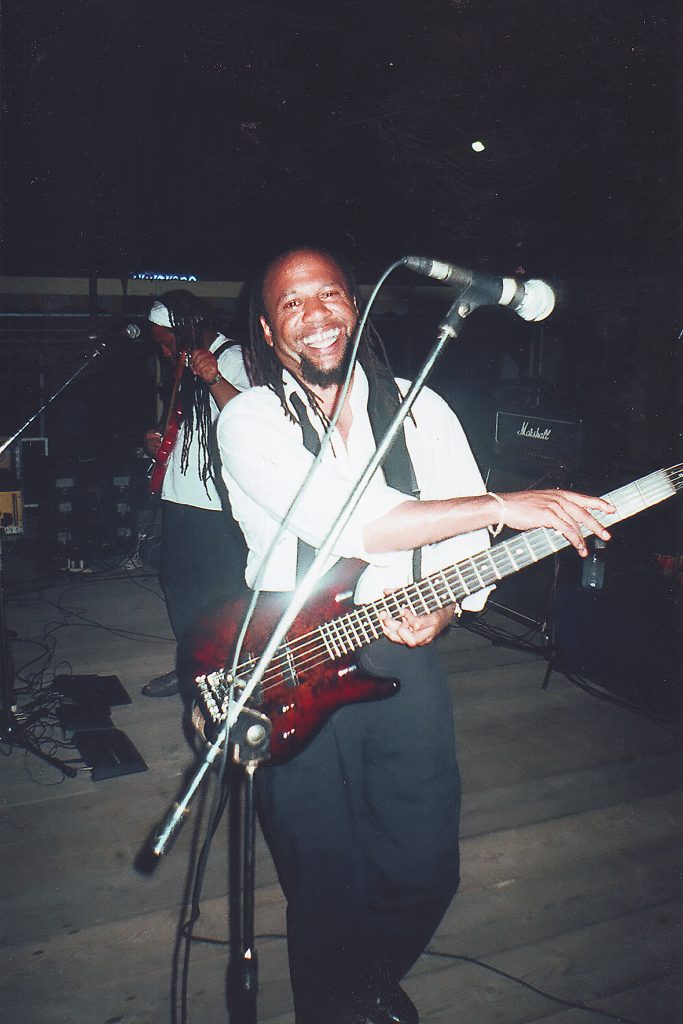
And the idea of holding the instrument close to my body was not lost on me. From then on, it mattered more to me, in more than just a physical sense. It also mattered in my life’s perspective as I began to love playing the upright bass from then on, that love was close to me too. I stayed with it, and after the junior high school Winter Concerts, I continued to play the upright bass and did not go back to playing the viola. And a year later, I finally got my first electric bass guitar, a Kimberly four string model that was violin shaped like the famous Hofner basses that Paul McCartney played in The Beatles.
It’s the beginnings of how I got here, and it has been my life’s instrument.
The Bass.
Leave a Reply